Sunday, May 19, 2013

The Three Differences Between Communism and Nazism


New Soviet People: Worker and Kolkhoz Woman
As an introductory note, let it be clearly stated that in this article the usage of the word “Communism” refers to Soviet-style socialism, or Marxism-Leninism as applied by the Soviet Union and later China.  “Nazism” refers specifically to German National Socialism in the Third Reich.

I’ve been reading a lot of Karl Marx lately, as well as a number of books and articles on the early decades of the Soviet Union under Lenin and Stalin, for a large term paper due in one of my political science classes.  The thesis of my paper is that Stalinism is the logical conclusion to Marxian socialism.  The abbreviated logic is that the many holes and open ends in Marxist theory, combined with the oppressive growth of the state under the Dictatorship of the Proletariat, render the conversion from socialism to stateless communism to be impossible.  The state will not wither away as workers enjoy new freedom, but rather will grow into a totalitarian one at their expense.

“On [Dr. Goebbels’] assertion that Lenin was the greatest man, second only to Hitler, and that the difference between Communism and the Hitler faith was very flight, a faction war opened with whizzing beer glasses” (from a November 1924 New York Times article, cited in The Soviet Story).

In my research I’ve found an overwhelming number of similarities and downright parallels between communism and Nazism, but what I found most striking were the three main differences between the two, which ultimately convinced me that Communism and Nazism are but two sides to the same utopian totalitarian coin.

1.      A superior human being.  Karl Marx offers in The German Ideology a glimpse of a utopia where the post-revolutionary proletariat is so productive that men are free to fish in the morning, hunt in the afternoon, and write literary and political criticisms in the evening.  From this, Trotsky expanded the utopia to include the idea of the New Soviet Man who
“will make it his purpose to master his own feelings, to raise his instincts to the heights of consciousness, to make them transparent, to extend the wires of his will into hidden recesses, and thereby to raise himself to a new plane, to create a higher social biologic type, or, if you please, a superman” (from Literature and Revolution).
Basically, the revolutionary proletarians will be such hard workers and so dedicated to the Marxian revolution that they will physically and mentally evolve into super-humans.  The Nazis, on the other hand, worshiped the Aryan as the next super-human.  In contrast to the Soviet superhero being more evolved due to class consciousness and dedication, the Aryan will advance because he is genetically (racially) superior to other humans and through selective breeding will continue to far surpass the others.

2.      Private property and state control.  In a May 1, 1927 speech Adolf Hitler said,
“We are socialists, we are enemies of today’s capitalistic economic system for the exploitation of the economically weak, with its unfair salaries, with its unseemly evaluation of a human being according to wealth and property instead of responsibility and performance, and we are determined to destroy this system under all conditions.”
The Soviet state confiscated the overwhelming majority of private property, encompassing real estate (land), industry/businesses, and physical objects like machines and tools.  Turning these items into state property, the Communist party-state planned the economy and dictated production.  The Nazi state never did away with capitalism, nor did it abolish private property, but rather marginally tolerated them for the sake of benefiting the state.  The Nazi party-state instead planned the economy and left it to the industrialists and business people to make it happen within heavy regulations imposed by the government.  This merger between corporate and state power was the socialism Hitler was after, with the benefit of German citizens derived from the economic outputs of the corporate/state marriage.

3.      Imperial expansion.  Marx reinterpreted Hegel’s theory of dialectics (opposing forces or viewpoints) to form historical materialism, which argues that history is the story of class struggle (The Communist Manifesto, Section I).  The struggle and victory of one class over another is what makes history move from one stage to another.  The first stages were primitive communism—as practiced by the early peoples—then slave society—as practiced by the ancient empires like Rome and the Greeks—and feudalism.  The world is currently in the capitalist stage, at the end of which the proletariat will rise up and usher in the socialist stage, which will pave the way for the stateless, moneyless utopia of communism.

The Russian Revolution/Civil War and later the Chinese Revolution/Civil War solidified the idea that the proletariat was beginning to complete its historical mission.  However, beyond Russia, no other country in the world became Marxist all by itself (except tiny Cuba).  Because the proletarians were lagging in rising up, it was the job of the Soviet Union to make revolution happen worldwide.  The USSR heavily funded Mao’s Communist army in China during the Chinese Civil War.  Later, the USSR and China either sent combat troops into or provided financial and material support to every militant Marxist movement in the world.  All the European countries that became Communist after World War II made the transformation at Soviet gunpoint.

Lenin’s idea was that the Communist Party of the Soviet Union would spread revolution across the world (implying that Moscow would be the world’s capital).  While Lenin and Stalin were intent on conquering the world for Communism to establish one giant Communist society, Hitler’s aim was to conquer the world and liquidate the undesirables for the benefit of the Aryan people of the worldwide Nazi German Empire

When comparing these three differences in the Soviet and National Socialist ideologies, they start to appear only superficially different.  They start to appear like… tyranny and genocide.

"Until its complete extermination or loss of national status, this racial trash always becomes the most fanatical bearer there is of counter-revolution, and it remains that. That is because its entire existence is nothing more than a protest against a great historical revolution... The next world war will cause not only reactionary classes and dynasties, but also entire reactionary peoples, to disappear from the earth. And that too is progress." –Friedrich Engels (from The Magyar Struggle)

"The classes and the races too weak to master the new conditions of life must give way.... They must perish in the revolutionary holocaust." -Karl Marx (from The People's Paper, April 16, 1856)


* * *


USSR postage stamp and Stalin/Hitler portrait are in the public domain and were obtained from Wikimedia Commons.  The video is from the film The Soviet Story by Edvins Snore and is used via Standard YouTube License.


Thursday, May 16, 2013

Liberating Syria without the Empire (UPDATED)


This article was originally published in July 2012 by Young Americans for Liberty.  It has been expanded and updated to make it relevant to May 2013.

Red stripe is government's, Green stripe is rebels'
Nearly a year has passed since the Obama administration began expressing their “deep concern” with the spiraling crisis in Syria—a crisis many are rightfully calling civil war.  The last time the DoD showed such “deep concern” over the deteriorating situation in any country was regarding Libya in 2011.  The concern over Libya was soon followed by Operation Odyssey Dawn and further intervention by the United Nations in the Libyan Civil War.  Given the track record of NATO and the United Nations, and an investigation by Senator Rand Paul revealing that the Obama administration is responsible for smuggling weapons from Libya to the Syrian rebels, it’s reasonable to assume that these powers will soon intervene officially in the Syrian civil war.

For over two years the Syrian government and the opposition have battled it out to the general stalemate renewed every day in blood.  The rebels waged the majority of offensives between November 2012 and March of this year, while the government forces have kept the score even.  In support of the Syrian government forces are many pro-Assad Shabiha militias, local militias trained by Iran, the Iranian Revolutionary Guards and Basij, and Hezbollah.  On the side of the rebels under the umbrella of the Syrian National Coalition are the decentralized Free Syrian Army, the Syrian Islamic Liberation Front, the al-Nusra Mujahedeen, and the Syrian Kurds.  So far at least 80,000 people have been killed in Syria, nearly 40,000 of them being combatants from the loyalist army, the rebel forces, and each side’s foreign state and non-state allies combined.

Guerrillas of the Free Syrian Army seeking help from the empires of the US or NATO may help the rebels’ cause in the short run, but it will greatly stunt the sovereignty of the Syrian free state in years to come, with foreign military bases and oil rigs on Syrian soil.  It would also potentially put the US and her allies in a hot war with Russia or Iran.  Many are still calling for US intervention since the Syrian government has made a policy of massacring whole villages of Sunni Muslims, in response to the trend that the majority of FSA rebels and anti-Assad Mujahedeen happen to be Sunni.

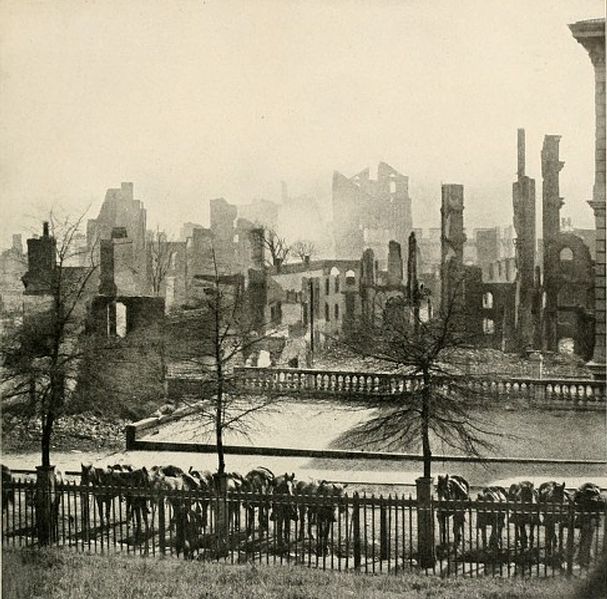
Richmond, Virginia in April 1865
However, there are two pressing reasons why the US government should not get involved (at least no more than it already unofficially is).  First, the US government has no moral or ethical standing to intervene in the civil wars of foreign states, given its conduct in the American Civil War.  The Lincoln Administration waged war on the Southern States not for the noble purpose of freeing slaves, but rather to maintain territorial integrity of the federal government.  Any slaves that were freed during the war were freed only in order to hurt the Southern war machine while slaves in Northern states continued to languish in bondage.  Furthermore, the US war machine blockaded all Southern ports in order to cut the Southern Confederacy off any foreign aid or intervention.  Most Southern guerrilla fighters, when captured or upon surrendering in 1865, were not treated as enemy combatants but as criminals in violation of martial law and were summarily executed by US soldiers.  Worse yet, a documented minimum of 50,000 civilians are reported to have died from the “collateral damage” from the total war which the US waged on the Southern population.  Farms large and small were burned in order to deny Confederate troops of any food source whatsoever.  Starvation was rampant.  The US Army burned and destroyed paths miles wide in Sherman’s March to the Sea.  Atlanta was burned to the ground.  Vicksburg and Petersburg were besieged and bombed indiscriminately for months, regardless of the likelihood of civilian casualties.  Richmond in 1865 looked like Berlin in 1945.

The second reason is that US intervention in recent Middle Eastern civil wars has not ended well for the United States.  Twice has the US intervened in the Afghan Civil War (which has evolved in distinct phases since 1978).  The first time was a CIA operation for the Mujahedeen against the Soviet Union and the Afghan Communists, in which the nominally unified Mujahedeen were armed with stinger missiles and a variety of other light weaponry.  The second time was October of 2001 as the American War in Afghanistan was initiated in order to rout the Taliban and Al Qaeda.  Unfortunately, this conflict within the War on Terror had the effect of decentralizing Al Qaeda through birthing regionally-based Al Qaeda groups throughout the Middle East, while the old guards of the original Al Qaeda have found refuge among the Pakistani Taliban.  Furthermore, the pulling of resources from the initial 2002 victory in Afghanistan to wage the Iraq War gave the Taliban ample time to rearm, regroup, and entrench themselves ever more deeply among their countrymen who grow weary of the foreign occupiers.  To add insult to injury, many of the weapons provided to the decentralized, only nominally unified Mujahedeen have been used to attack and kill American and allied Afghan troops.

Free Syrian Army troops being transported in a civilian truck
The other, more recent civil war in which the US, NATO, and UN have intervened is the Libyan conflict.  What the civil wars in Libya and Afghanistan have in common with the present situation in Syria is a decentralized, only nominally unified opposition of rebels waging war against an unpopular regime.  The Afghan Mujahedeen and Libyan opposition were allies in fighting against their respective unpopular regimes, but never did the various factions unite under one government or command structure.  Following the overthrow of the Afghan Communist regime, the Afghan Mujahedeen returned to factionalism and fought a multisided civil war until the Taliban won out (and subsequently fought the minority Northern Alliance).  Following the official end of the Libyan Civil War, low-level civil war persists to this day as rogue militias fight against the new Libyan government, fight against each other, and periodically kill American diplomats.  Given that the Syrian opposition is no more unified or organized than the Afghan Mujahedeen or the Libyan opposition, it’s entirely reasonable to conclude that civil war would continue in Syria even after the possible overthrow of the Assad regime.

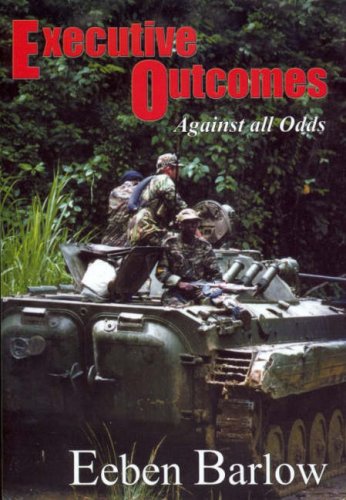
The best way for the Syrian free forces to tip the balance of the civil war in their favor would be to imitate the course of action taken by the government of Sierra Leone during its civil war.  By 1995 the psychotic guerrillas of the Revolutionary United Front had advanced to within 20 miles of Freetown (the Capital), waging a terror campaign the entire way which involved forced conscription of child soldiers, routine execution of civilians, and a practice of pacifying the civilian population via hacking off the limbs of innocent bystanders.  The desperate government hired the private military company Executive Outcomes (for $1.8 million a month, paid by the International Monetary Fund) to drive back the RUF, retake all towns, villages, and mines held by the RUF, and to destroy their main base of operations.  Within a matter of months Executive Outcomes had taken back territory lost to the RUF, destroyed the enemy’s main base, and forced the RUF to admit defeat and sign the Abidjan Peace Accord.  Civil war in Sierra Leone only resumed when the UN and IMF pressured the government to expel Executive Outcomes.

Various examples in recent history show that there are good uses and bad uses for mercenary companies.  A bad use would be hiring Blackwater to operate in crowded areas without any legal repercussions, thus giving them carte blanche for violence (e.g. Baghdad Bloody Sunday).  An objectively good and even noble use of a PMC would be one such as Sierra Leone’s hiring of Executive Outcomes to neutralize an insurgency infamous for hacking off the legs of recently “liberated” civilians.  This solution could easily be applied in Syria.

The Syrian National Council could grant legal permission for a PMC to operate within Syria in order to fight the loyalist army and arrest Assad.  Furthermore, the hired PMC—fully accountable and answerable to the Syrian National Coalition—could take on the dual mission of fighting the Assad regime while training the Free Syrian Army to be a professional fighting force with a central chain of command under the Syrian National Coalition.  With the PMC taking on a heavy burden of the fighting, part of the Free Syrian Army would be free to establish its integrity by putting into check all the temporarily allied, potentially rogue militias.  This would help ensure that the overthrow of the Assad regime would not be followed by more civil war as has been the case in Afghanistan and Libya.  Finally, as the newly professional Syrian National Army demonstrates its ability to preserve stability in the newly free Syria, the PMC would return to its home base in its home country.

Such an intervention, applied from within by a local government as opposed to being imposed from without by a foreign empire, could tip the scales in the balance of the Syrian opposition, bring a speedier end to the Syrian Civil War, and preserve the sovereignty of the Syrian Free State while keeping foreign empires at bay.


* * *


Syrian double flag, Free Syrian Army, and Richmond images are in the public domain and were obtained from Wikimedia Commons.  Executive Outcomes book cover courtesy of Amazon.com.

Thursday, May 9, 2013

"Not In My F-ing Name, Congressman!"

Written in April. Publication was delayed to let the incident die down out of respect for YAL.


This month’s Young Americans for Liberty California State Convention in Fullerton was definitely eventful and entertaining, with the lively high points far outweighing the mid-afternoon lulls of sleepiness. Three events perhaps still cling to the minds of the more than 200 liberty movement activists who attended. First was the great video chat with Congressman Ron Paul. Second was the slot where Campaign for Liberty Chairman (and former Ron Paul presidential campaign manager) John Tate talked about the inside scoops of the 2012 campaign.

Third was the question and answer period with Congressman Dana Rohrabacher of Orange County following his keynote address. Everyone who attended remembers the ‘F’ word being thrown at Rohrabacher following his answer to a question—an answer which so incensed the inquirer that he saw fit to shout that vulgarity to the Congressman. The title of this article is [almost] the verbatim comment made by the angry libertarian purist. I was deeply offended by this.

I met the angry inquirer and talked with him later on at the Liberty on the Rocks social. He’s a pretty cool guy and I highly enjoyed chatting with him and discussing things only libertarians would care about (such as the differences between Bitcoin and Litecoin). Nonetheless, I simply cannot condone the way he conducted himself to the keynote speaker at the convention. It was rash, it was rude, and it reflected poorly on our organization.

I firmly agree with the political proverb that one’s 80% friend is NOT his 20% enemy. This is the case with Congressman Rohrabacher. I know his record and could already tell my much of the content of his keynote address that he’s not libertarian, but rather a states’ rights conservative. Sure, it would be nice if he was libertarian because then we’d have another Justin Amash, but that’s not the case. We in the liberty movement often become so passionately committed to changing the world into a constitutional/free market Shangri-La that we forget that we need to live life on life’s terms, not the other way around.

Rohrabacher in Afghanistan, 1988
It was already kind of Rohrabacher to drop his community appearances and constituent services for an afternoon to come speak at our convention free of charge. Even though there were elements where he disagreed with us, he was being completely honest in explaining his beliefs and opinions, and he never tried pandering to us on the Ron Paul bandwagon. While Rohrabacher disagrees with our organization in some elements of his foreign policy, he’s our 80% friend, but this weekend some people—not just the angry inquirer but also others who tried trolling him into a debate—treated him as a 100% enemy.

Let me stress where he stands on issues near and dear to our organization (and the greater liberty movement):

· Regardless of the reasons behind his motivation, he supports immediate withdrawal from Afghanistan
· He admitted that supporting the Iraq War was the worst mistake he ever made
· He opposes ObamaCare
· He votes against Federal anti-marijuana bills and supports state-level legalization
· He votes YES on Audit the Fed and co-sponsored two previous Fed transparency acts
· He voted NO on NDAA
 
He may not be libertarian, but he’s on our side on most of the issues! People like him ought to be welcomed into our movement, and when people as busy as him come and speak to YAL free of charge, we ought to put our best foot forward. In no way is it inclusive or acceptable for we in the liberty movement to troll our keynote speakers into debates and swear at them.

Remember that we’re all human beings and we’re prone to emotions, but we must not become slaves to our emotion. Adam Weinberg made a great point in illuminating the difference between our basis for discussing issues versus the bases of ultra-leftists and neoconservatives: we base our arguments and presentations thereof on reason while the opposition founds theirs purely on emotion. In this context, some of our members abandoned reason for emotion and it reflected poorly on all of us.


Most people don’t enter the liberty movement by reading Rothbard’s Man, Economy, and State. Most people don’t become libertarian just by reading Atlas Shrugged. However, many do start to change their minds slightly. It’s our blessed opportunity to politely ask questions that compel them to check their premises. Never is it a good idea to be rude, intellectual-elitist, or to use vulgarity. Otherwise, a potentially dedicated member of the liberty movement is lost forever because of those “rude Ron Paul people.”

On a lighter note, Congressman Rohrabacher gave YAL members an open invitation to join him at his office for liberty-themed movies and discussion. Now THIS is an opportunity for us to politely engage an influential person on the issues and also be good ambassadors of the liberty movement!

Who knows, Rohrabacher may become one of us down the line!

**It should be noted that around the time of writing this article, Congressman Rohrabacher voted in favor of NDAA 2013.  While I find this action highly discouraging, I choose to follow Dr. Ron Paul's example of making enemies of no one, choosing instead to reach out and educate.  I hope to have fruitful discussions with Congressman Rohrabacher in the near future, and still have faith that he'll join the ranks of other former neoconservatives in Congress and climb on-board the great train of the liberty movement.

* * *

First image courtesy of YAL.  Second and third images courtesy of rohrabacher.house.gov.

Sunday, April 14, 2013

Update!

In light of the recent bat sh*t crazy antics engaged in by the North Korean regime, I've updated and expanded my rant "I'm a Fan of Kim Jong Un."  Check it out here.


Wednesday, March 6, 2013

Apolitical Punk Rockers Are Like Vichy France


To all my fellow punk rock and metal aficionados, I open with this message: if the title of this rant offends you, I’m well pleased with my work and will now defend the simple statement which brought you angrily to this page and ultimately raised my Google ranking.

We all know, or should know, what Vichy France is famous for: surrender and collaboration during World War II.  I am by NO means calling punks Nazis or Nazi sympathizers.  What I am doing is criticizing their apolitical tendencies.  So many people in the punk and metal music scenes are avowedly apolitical.  They’re convinced “the system” is completely rigged (which it largely is) and they refuse to participate in the system or the “political machine.”  Many of them also advocate anarchy.

The problem in the punk scene is that most anarchists’ understanding of anarchy itself and spontaneous order is very superficial, which ultimately makes their belief in anarchy superficial as well.  Recall that the fascist French State’s existence resulted from a surrender of the French armed forces in the early battle for France and a desire to spare the French people and infrastructure from German destruction.  Many French cities, towns, and landmarks were destroyed in World War I as the Germans advanced through much of France.  Paris itself would have become a trench battlefield had the U.S. Marines not pushed the Germans back at Belleau Wood.  The widespread destruction of the First World War was not forgotten, and the French people had no desire to see their country destroyed again.

The French did not surrender or collaborate because they particularly liked the Germans or fascism.  They felt they had lost the war and they gave up, settling for what they thought was the lesser of two evils to avoid total destruction as a nation and people.

The majority of the French people equally despised the Vichy French government and the Third Reich.  Still, they tolerated daily life under the puppet government and the German occupiers.  They tolerated the military and police checkpoints and kept their mouths shut in order to avoid arrest.  They had very little, if any, say in governmental affairs and mostly lived an apolitical life, simply trying to survive with their families.  They figured they were screwed, so they gave up.  The fact that they lived outside of the system did not make the Vichy French government or the Third Reich any weaker, nor did it create any difficulties for the oppressive fascist authorities.

This same apathetic defeatism towards the political process is rampant in the punk scene.  Punks are convinced that nothing they do will matter so they’re better off just staying outside of politics.  There’s a fatal flaw in their logic: the resignation of the people in Vichy France neither rolled back the German invaders nor stopped the authorities from arresting random people and killing Jews.  So too the non-participation of punks in politics doesn’t scale back the size and reach of oppressive government nor does it prevent it from over-taxing the working people, sending people to prison for marijuana, or waging undeclared wars abroad.

Anarcho-communism
However, while they may be apolitical, most punk rockers hold onto some kind of political ideology or personal philosophy which shapes their worldview.  Many people in the music scene are in love with Karl Marx’s lofty-sounding ideas even though they’re highly self-contradictory and inconsistent with human nature.  According to Marxist theory, there are three stages of history remaining: capitalism, with bourgeois government that favors the so-called 1%; socialism, which demands a huge proletarian government to take over all sectors of the economy and civil society; and communism, with no government, no monetary system, and total harmony among humankind.

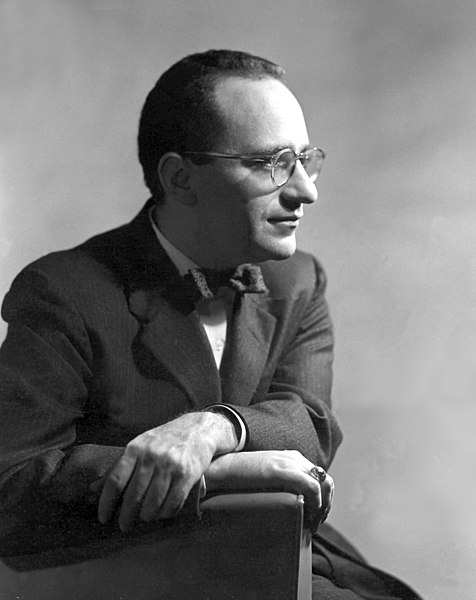
If the punks and metal heads shouting “Anarchy!” were familiar with the groundbreaking work of Murray Rothbard, the greatest anarchist intellectual and one of the greatest libertarians who ever lived, they would find their entire worldview radically changed for the better.  In “The Death Wish of the Anarcho-Communists,” Rothbard explains that even though anarcho-capitalism and anarcho-communism advocate libertarian ideas, the latter is doomed to fail while only the former can succeed.

Anarcho-communism can’t exist because the maximum liberty talked about in the theory actually breaks down and disappears during the socialist stage of history.  After all, how can there be liberty when the government is very large, the state runs all parts of society, and all members of society are servants of the state?  Not only is there a lack of freedom, but no one is allowed to make a profit or any kind of gain over anyone else, which destroys people’s incentive to work hard and excel.  All of this kills progress and prosperity.  This is exactly what happened in the Soviet Union.  People like to blame Stalin for killing socialism’s big chance to succeed, as if Soviet socialism was a warped product of Stalin.  In reality, Stalin was merely a product of the easily corruptible Marxist system, just as Jim Crow was the product of harsh Reconstruction and today’s incomprehensible Ozzy Osbourne is the product of too much substance-enhanced partying.

Murray N. Rothbard
Murray Rothbard makes a strong case for anarcho-capitalism and libertarian ideas.  Aside from his monolithic books, Rothbard has penned hundreds of groundbreaking essays and articles that would serve as excellent portals into the libertarian and anarchist philosophy.  A great article of his and an equally great starting point for new libertarians is “War, Peace, and the State” which explains the libertarian non-aggression principle—as free individuals, I agree not to hurt you if you agree not to hurt me—and how war and plunder are necessary for the health of the oppressive state.

Rothbard’s essay “Anatomy of the State” (also published as a short book) expounds on the predatory nature of governments and “the state” against individuals and their liberty.  Especially compelling is the way he portrays “government” as small, elite collections of individuals using the broad powers of a legal fiction called “the state” to oppress and prey on other individuals.  Left, Right, and the Prospects for Liberty” shatters the narrow illusion of the political left and the political right.  The illusion to which I refer is familiar to everyone: even if a person is neither “Democrat” nor “Republican,” they’re still expected to belong either to “the left” or “the right” of the political spectrum, as if there was no middle ground or third alternative.  “Left, Right” continues in making a case for libertarianism and maximum liberty for the individual as the third alternative.  Such would be the ideal system for punks and others in the music scene, since rock ‘n’ roll itself symbolizes a rebellion from the conventional norms of mainstream society and the desire of rockers to govern their own lives and determine their own destiny.

Most punks and others on this side of the rock ‘n’ roll macro-community are determined to remain apolitical and not participate in the political process.  They fail to understand, however, that the political process is not at all limited to the voting booth on Election Day.  The political process includes activism and education in order to change people’s minds and attitudes, enacting change in the national dialogue, eventually enacting change in public policy (i.e. law and government actions).

If the wannabe anarchists in the music scene read Rothbard’s groundbreaking works, they would find not only a solid foundation for establishing deep beliefs, but they would also be moved to become politically involved. Their involvement in the political process as agents of change could start a chain of events that would eventually rollback and repeal layers of government, giving maximum freedom to the individual.  In this digital age where media, communication, and networking are easily done with a click, punks have more power than they’re willing to give themselves credit for.

Going back to World War II, most of the French may have given up and tolerated the Third Reich and its puppet Vichy government, but there was a core of noble people who didn’t.  Small groups of passionate men and women with firearms, contraband publications, and intelligence networks formed the noble French Resistance.  It was these loosely coordinated groups of courageous people who fought with everything they could and made life difficult for the fascists.  Had it not been for these people, the invasion and liberation of France by the Allied forces would not have been nearly as successful.  Had the Resistance not performed during their finest hour, the Allied advance through France and Western Europe would have been significantly slower, many more Allied troops would have been killed, and the Holocaust wouldn’t have been stopped until much later.

Members of the Resistance taken prisoner by the fascist Milice
Many punks use the corruption of the American political process to justify their nonparticipation.  Even though our government today is guilty of committing the same grievances the founding fathers had against Great Britain at the time of the American Revolution, we have not been forced to take up arms for violent revolution.  Today we’re incredibly lucky that we have the privilege of engaging in a peaceful revolution already in motion on the political scene.  It’s now possible and essential for as many people to be involved in politics as possible.  Our battlefields are the street corners, the talk shows and blogs, and the ballot box.  Those who are involved are the lifeblood of our unique American democracy.

Those who choose not to participate make it easier for democracy to be hijacked by special interests who write laws in their own favor, especially by government entities that grow themselves and grant themselves infinitely more power.  American democracy must be preserved in order to roll back government and restore maximum individual liberty.  Whether a person believes in limited government or anarchy—no government at all—it’s irresponsible to simply proclaim an idea without doing anything whatsoever to help make it a reality.

Hence, whenever I wear my Ron Paul t-shirt to a show and some nitwit throws up his fist and shouts “Anarchy!” I can only do a face-palm to occupy my hand, which otherwise would have been used to slap him for his ignorance.  After all, that nitwit’s become no different from the pseudo-intellectual hipster who throws around names like Jean-Paul Sartre and Noam Chomsky without having a true understanding of their ideas (but that’s a whole other rant for another day).  Where I come from we call these pseudo-intellectuals “phonies.”

Ron Paul—a member of the Republican Party, of all parties!—is the first great statesman in modern-day America to bring lofty ideas of limited government and maximum individual liberty to the table in an inspiring manner.  His run for the Presidency truly changed the national dialogue.  For the first time, people of all ages and political persuasions are discussing abolishing the Federal Reserve banking cartel, ending the War on Drugs, and rolling back the American Empire by bringing all troops home and not policing the world.

"Dr. Ron Paul" by Caleb O'Connor
Paul’s ideas resonated with a lot of people.  Between the combined primary election and caucus votes across the country, Paul’s platform of liberty and tolerance earned over 2 million votes.  Paul may not have won the GOP nomination, but he inspired at least 100,000 college students to share his ideas and sign up to become activists who will inevitably achieve a snowball effect in popularizing libertarian ideas.  Many of these young activists have joined the Republican Party and are currently swinging its platform from an oppressive neoconservative one to a libertarian one.

Better yet, Paul’s ideas are becoming increasingly mainstream, even penetrating the music scene.  Celebrity musicians from all genres are subscribing to libertarian ideas.  Pop singers Kelly Clarkson and John Mayer endorsed Ron Paul.  ANTiSEEN’s Joe Young has made libertarianism his philosophy, as well as blues guitarist Jimmy Vaughn and country star Dwight Yoakam.  Perhaps the most famous libertarian punk rocker is former Misfits front man Michale Graves, a passionate Ron Paul supporter who continues to advocate libertarian ideas.  Graves will soon be touring to promote his new “Vagabond” album.

If one man managed to convince millions of voters, inspire hundreds of thousands of activists, and change the national dialogue, what is every punk rocker’s excuse for not participating?  Murray Rothbard wrote and educated.  Ron Paul ran for office and inspired large masses.  You and I must carry the ideas of maximum liberty and rugged individualism into civil society and to the ballot box.

What the apathetic people in the music scene are failing to grasp is that American democracy does not have to be top-down.  Federal elections may be easily corrupted, but the same isn’t true for city council elections.  How difficult is it to rally around a level-headed member of the community?  One who believes the police are better utilized going after burglars and robbers than pot smokers, who thinks the local school board ought to have more sway over the curriculum than the lobbyist-owned bureaucrats in the U.S. Department of Education, and that a permit shouldn’t be required every time more than two people want to practice their First Amendment right in public…  Such people exist, but they’ll never be found as long as we in the punk and metal communities (and all other communities) maintain apathetic attitudes.

Now that you’ve read this you must ask yourself: will you be like Vichy France or will you join the peaceful resistance?


* * *


Anarcho-capitalism image obtained from Wikimedia Commons and is in the public domain. Anarcho-communism image was obtained from Mises.org via CC BY 3.0 license. Rothbard portrait obtained from Wikimedia Commons courtesy of Mises.org via the same license.

French Milice and Resistance POWs photo courtesy of Sammlung von Repro-Negativen (Bild 146) through the German Federal Archives. It was obtained from Wikimedia Commons and used via CC BY-SA 3.0 license.

Ron Paul painting is the work and property of Caleb O'Connor.  Use of the image does not necessarily mean Mr. O'Connor endorses the views in the article and is used primarily to promote Mr. O'Connor's work.  See more of his excellent paintings at CalebOConnor.com

I originally submitted this article for the Mises Daily but the editor at Mises.org blew me off twice.  Poo on you, sir.