Wednesday, March 6, 2013

Apolitical Punk Rockers Are Like Vichy France


To all my fellow punk rock and metal aficionados, I open with this message: if the title of this rant offends you, I’m well pleased with my work and will now defend the simple statement which brought you angrily to this page and ultimately raised my Google ranking.

We all know, or should know, what Vichy France is famous for: surrender and collaboration during World War II.  I am by NO means calling punks Nazis or Nazi sympathizers.  What I am doing is criticizing their apolitical tendencies.  So many people in the punk and metal music scenes are avowedly apolitical.  They’re convinced “the system” is completely rigged (which it largely is) and they refuse to participate in the system or the “political machine.”  Many of them also advocate anarchy.

The problem in the punk scene is that most anarchists’ understanding of anarchy itself and spontaneous order is very superficial, which ultimately makes their belief in anarchy superficial as well.  Recall that the fascist French State’s existence resulted from a surrender of the French armed forces in the early battle for France and a desire to spare the French people and infrastructure from German destruction.  Many French cities, towns, and landmarks were destroyed in World War I as the Germans advanced through much of France.  Paris itself would have become a trench battlefield had the U.S. Marines not pushed the Germans back at Belleau Wood.  The widespread destruction of the First World War was not forgotten, and the French people had no desire to see their country destroyed again.

The French did not surrender or collaborate because they particularly liked the Germans or fascism.  They felt they had lost the war and they gave up, settling for what they thought was the lesser of two evils to avoid total destruction as a nation and people.

The majority of the French people equally despised the Vichy French government and the Third Reich.  Still, they tolerated daily life under the puppet government and the German occupiers.  They tolerated the military and police checkpoints and kept their mouths shut in order to avoid arrest.  They had very little, if any, say in governmental affairs and mostly lived an apolitical life, simply trying to survive with their families.  They figured they were screwed, so they gave up.  The fact that they lived outside of the system did not make the Vichy French government or the Third Reich any weaker, nor did it create any difficulties for the oppressive fascist authorities.

This same apathetic defeatism towards the political process is rampant in the punk scene.  Punks are convinced that nothing they do will matter so they’re better off just staying outside of politics.  There’s a fatal flaw in their logic: the resignation of the people in Vichy France neither rolled back the German invaders nor stopped the authorities from arresting random people and killing Jews.  So too the non-participation of punks in politics doesn’t scale back the size and reach of oppressive government nor does it prevent it from over-taxing the working people, sending people to prison for marijuana, or waging undeclared wars abroad.

Anarcho-communism
However, while they may be apolitical, most punk rockers hold onto some kind of political ideology or personal philosophy which shapes their worldview.  Many people in the music scene are in love with Karl Marx’s lofty-sounding ideas even though they’re highly self-contradictory and inconsistent with human nature.  According to Marxist theory, there are three stages of history remaining: capitalism, with bourgeois government that favors the so-called 1%; socialism, which demands a huge proletarian government to take over all sectors of the economy and civil society; and communism, with no government, no monetary system, and total harmony among humankind.

If the punks and metal heads shouting “Anarchy!” were familiar with the groundbreaking work of Murray Rothbard, the greatest anarchist intellectual and one of the greatest libertarians who ever lived, they would find their entire worldview radically changed for the better.  In “The Death Wish of the Anarcho-Communists,” Rothbard explains that even though anarcho-capitalism and anarcho-communism advocate libertarian ideas, the latter is doomed to fail while only the former can succeed.

Anarcho-communism can’t exist because the maximum liberty talked about in the theory actually breaks down and disappears during the socialist stage of history.  After all, how can there be liberty when the government is very large, the state runs all parts of society, and all members of society are servants of the state?  Not only is there a lack of freedom, but no one is allowed to make a profit or any kind of gain over anyone else, which destroys people’s incentive to work hard and excel.  All of this kills progress and prosperity.  This is exactly what happened in the Soviet Union.  People like to blame Stalin for killing socialism’s big chance to succeed, as if Soviet socialism was a warped product of Stalin.  In reality, Stalin was merely a product of the easily corruptible Marxist system, just as Jim Crow was the product of harsh Reconstruction and today’s incomprehensible Ozzy Osbourne is the product of too much substance-enhanced partying.
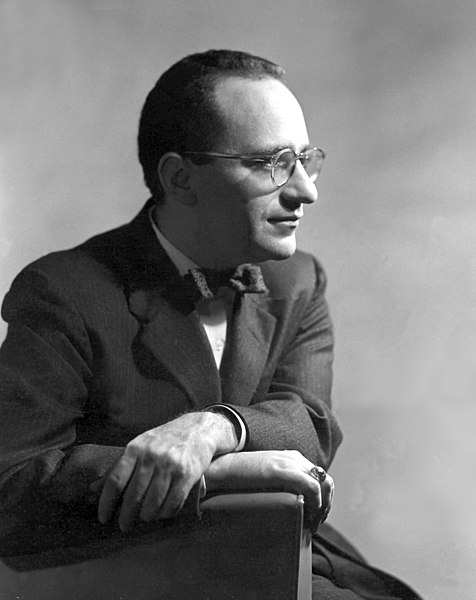
Murray N. Rothbard
Murray Rothbard makes a strong case for anarcho-capitalism and libertarian ideas.  Aside from his monolithic books, Rothbard has penned hundreds of groundbreaking essays and articles that would serve as excellent portals into the libertarian and anarchist philosophy.  A great article of his and an equally great starting point for new libertarians is “War, Peace, and the State” which explains the libertarian non-aggression principle—as free individuals, I agree not to hurt you if you agree not to hurt me—and how war and plunder are necessary for the health of the oppressive state.

Rothbard’s essay “Anatomy of the State” (also published as a short book) expounds on the predatory nature of governments and “the state” against individuals and their liberty.  Especially compelling is the way he portrays “government” as small, elite collections of individuals using the broad powers of a legal fiction called “the state” to oppress and prey on other individuals.  Left, Right, and the Prospects for Liberty” shatters the narrow illusion of the political left and the political right.  The illusion to which I refer is familiar to everyone: even if a person is neither “Democrat” nor “Republican,” they’re still expected to belong either to “the left” or “the right” of the political spectrum, as if there was no middle ground or third alternative.  “Left, Right” continues in making a case for libertarianism and maximum liberty for the individual as the third alternative.  Such would be the ideal system for punks and others in the music scene, since rock ‘n’ roll itself symbolizes a rebellion from the conventional norms of mainstream society and the desire of rockers to govern their own lives and determine their own destiny.

Most punks and others on this side of the rock ‘n’ roll macro-community are determined to remain apolitical and not participate in the political process.  They fail to understand, however, that the political process is not at all limited to the voting booth on Election Day.  The political process includes activism and education in order to change people’s minds and attitudes, enacting change in the national dialogue, eventually enacting change in public policy (i.e. law and government actions).

If the wannabe anarchists in the music scene read Rothbard’s groundbreaking works, they would find not only a solid foundation for establishing deep beliefs, but they would also be moved to become politically involved. Their involvement in the political process as agents of change could start a chain of events that would eventually rollback and repeal layers of government, giving maximum freedom to the individual.  In this digital age where media, communication, and networking are easily done with a click, punks have more power than they’re willing to give themselves credit for.

Going back to World War II, most of the French may have given up and tolerated the Third Reich and its puppet Vichy government, but there was a core of noble people who didn’t.  Small groups of passionate men and women with firearms, contraband publications, and intelligence networks formed the noble French Resistance.  It was these loosely coordinated groups of courageous people who fought with everything they could and made life difficult for the fascists.  Had it not been for these people, the invasion and liberation of France by the Allied forces would not have been nearly as successful.  Had the Resistance not performed during their finest hour, the Allied advance through France and Western Europe would have been significantly slower, many more Allied troops would have been killed, and the Holocaust wouldn’t have been stopped until much later.

Members of the Resistance taken prisoner by the fascist Milice
Many punks use the corruption of the American political process to justify their nonparticipation.  Even though our government today is guilty of committing the same grievances the founding fathers had against Great Britain at the time of the American Revolution, we have not been forced to take up arms for violent revolution.  Today we’re incredibly lucky that we have the privilege of engaging in a peaceful revolution already in motion on the political scene.  It’s now possible and essential for as many people to be involved in politics as possible.  Our battlefields are the street corners, the talk shows and blogs, and the ballot box.  Those who are involved are the lifeblood of our unique American democracy.

Those who choose not to participate make it easier for democracy to be hijacked by special interests who write laws in their own favor, especially by government entities that grow themselves and grant themselves infinitely more power.  American democracy must be preserved in order to roll back government and restore maximum individual liberty.  Whether a person believes in limited government or anarchy—no government at all—it’s irresponsible to simply proclaim an idea without doing anything whatsoever to help make it a reality.

Hence, whenever I wear my Ron Paul t-shirt to a show and some nitwit throws up his fist and shouts “Anarchy!” I can only do a face-palm to occupy my hand, which otherwise would have been used to slap him for his ignorance.  After all, that nitwit’s become no different from the pseudo-intellectual hipster who throws around names like Jean-Paul Sartre and Noam Chomsky without having a true understanding of their ideas (but that’s a whole other rant for another day).  Where I come from we call these pseudo-intellectuals “phonies.”

Ron Paul—a member of the Republican Party, of all parties!—is the first great statesman in modern-day America to bring lofty ideas of limited government and maximum individual liberty to the table in an inspiring manner.  His run for the Presidency truly changed the national dialogue.  For the first time, people of all ages and political persuasions are discussing abolishing the Federal Reserve banking cartel, ending the War on Drugs, and rolling back the American Empire by bringing all troops home and not policing the world.

"Dr. Ron Paul" by Caleb O'Connor
Paul’s ideas resonated with a lot of people.  Between the combined primary election and caucus votes across the country, Paul’s platform of liberty and tolerance earned over 2 million votes.  Paul may not have won the GOP nomination, but he inspired at least 100,000 college students to share his ideas and sign up to become activists who will inevitably achieve a snowball effect in popularizing libertarian ideas.  Many of these young activists have joined the Republican Party and are currently swinging its platform from an oppressive neoconservative one to a libertarian one.

Better yet, Paul’s ideas are becoming increasingly mainstream, even penetrating the music scene.  Celebrity musicians from all genres are subscribing to libertarian ideas.  Pop singers Kelly Clarkson and John Mayer endorsed Ron Paul.  ANTiSEEN’s Joe Young has made libertarianism his philosophy, as well as blues guitarist Jimmy Vaughn and country star Dwight Yoakam.  Perhaps the most famous libertarian punk rocker is former Misfits front man Michale Graves, a passionate Ron Paul supporter who continues to advocate libertarian ideas.  Graves will soon be touring to promote his new “Vagabond” album.

If one man managed to convince millions of voters, inspire hundreds of thousands of activists, and change the national dialogue, what is every punk rocker’s excuse for not participating?  Murray Rothbard wrote and educated.  Ron Paul ran for office and inspired large masses.  You and I must carry the ideas of maximum liberty and rugged individualism into civil society and to the ballot box.

What the apathetic people in the music scene are failing to grasp is that American democracy does not have to be top-down.  Federal elections may be easily corrupted, but the same isn’t true for city council elections.  How difficult is it to rally around a level-headed member of the community?  One who believes the police are better utilized going after burglars and robbers than pot smokers, who thinks the local school board ought to have more sway over the curriculum than the lobbyist-owned bureaucrats in the U.S. Department of Education, and that a permit shouldn’t be required every time more than two people want to practice their First Amendment right in public…  Such people exist, but they’ll never be found as long as we in the punk and metal communities (and all other communities) maintain apathetic attitudes.

Now that you’ve read this you must ask yourself: will you be like Vichy France or will you join the peaceful resistance?


* * *


Anarcho-capitalism image obtained from Wikimedia Commons and is in the public domain. Anarcho-communism image was obtained from Mises.org via CC BY 3.0 license. Rothbard portrait obtained from Wikimedia Commons courtesy of Mises.org via the same license.

French Milice and Resistance POWs photo courtesy of Sammlung von Repro-Negativen (Bild 146) through the German Federal Archives. It was obtained from Wikimedia Commons and used via CC BY-SA 3.0 license.

Ron Paul painting is the work and property of Caleb O'Connor.  Use of the image does not necessarily mean Mr. O'Connor endorses the views in the article and is used primarily to promote Mr. O'Connor's work.  See more of his excellent paintings at CalebOConnor.com

I originally submitted this article for the Mises Daily but the editor at Mises.org blew me off twice.  Poo on you, sir.


Monday, February 25, 2013

Midnight in Paris and 21st Century Libertarians


This evening I spent a wonderful time celebrating a happy occasion.  I had a fancy dinner with several friends and enjoyed their good company.  After parting with them, I stopped at a shoppette for a fountain drink and chanced upon a DVD for sale of a film I love, Midnight in Paris, which I just finished watching.  What a wonderful flick!  (In response to those snobby film buffs I say yes, you’re right that every Woody Allen movie is the same movie, and it’s a great movie, so shut the hell up already.)


Apart from making me feel charmed and all kinds of warm and fuzzy, as many nostalgic movies do, Midnight in Paris threw some great insights my way.  The main character is Gil Bender, a hopeless romantic engaged to a cosmopolitan and very materialistic woman.  While his fiancĆ© lives very much in the now, Gil would prefer nothing but to stroll down every boulevard and admire every cafĆ© in Paris, which they’re currently visiting.  Gil leaves his fiancĆ© and her parents and friends one night and stumbles into a wrinkle in time which takes him back to the 1920s, the very time he constantly dreams of.

Gil gets the golden opportunity to party and spend quality time with his idols: Cole Porter, F. Scott Fitzgerald, Ernest Hemingway, Gertrude Stein, Pablo Picasso, and many more.  Along the way Gil meets the hauntingly beautiful Adrianna who is a dreamer and a romantic like he is.  The difference is that Gil is absolutely in love with the Paris of the 1920s while Adrianna wishes to go to the 1890s, as she’s just as discontented with life in her time as Gil is with 2010.  Gil and Adrianna fall in love but are soon faced with a choice to make; one wants to run away to the ‘20s while the other wishes to run away to the nineteenth century.

Gil realizes that Adrianna’s naĆÆve idealism toward an earlier time is just as infantile and cowardly as his own adoration of her time period.  He realizes that the era in which he lives isn’t unsatisfactory, but that life itself can be unsatisfactory quite often and running away won’t fill the emptiness he feels.  Instead, one must make the best of what he’s been given and learn to appreciate the beauty around him.

That conclusion is exactly how I feel about the liberty movement today!  (Thank you, Woody Allen, for inspiring me.)

2012 was a bitterly difficult year for libertarians—Republicans, Capital Ls, and independents alike—and the future looks bleak for us as we slog through the anti-liberty mud and feces that is American politics in 2013.  We’re incredibly disappointed over how crookedly the deck was stacked against Ron Paul.  We’re disappointed that many of our liberty candidates were annihilated in the various elections throughout the year.  The elation that came with our victory over SOPA and PIPA was short-lived as many of the freedom-killing elements in the censorship bills were quietly inserted into other bills long since passed into law.  We watched in horror as the troop presence in Afghanistan was extended from 2014 to 2024 and the drones continue to wreak devastating collateral damage in Pakistan and Yemen.

Many libertarians are fed up with the federal government.  Many libertarians are done with politics altogether.  I’ve spoken with several folks and read about many who have decided to pack up and move to Brazil where there are more entrepreneurial opportunities and the “donations” as a workaround for government permits are affordable.  Many others will stock up on guns and ammo, grow their own food, and run sustainable homesteads.  Others still are leaving politics altogether, seeing it merely as a waste of time because of the extent to which the system is corrupted.  They quietly invest in gold as a backup for the welfare of their families as they passively wait for the worst to happen.


There are moments when we wish we could go back in time and live in eras where we know the outcome of history.  We want to enjoy the economic prosperity of the 1950s.  We want to vote for Barry Goldwater for President.  We want to be able to attend Ludwig von Mises’ exclusive lectures in New YorkWe’d love the opportunity to witness Murray Rothbard arguing with Nathaniel Branden in Ayn Rand’s smoke-filled apartment.  I’d treat Henry Hazlitt to dinner in a heartbeat just to hear him tell stories of what a pompous ass John Maynard Keynes is.  I’d give my right arm (pun intended) for a taste of the Old Right in Frank Chodorov, enjoying his take on the growing inclination of his era’s popular culture towards socialism.  I might even get my hopes up that Chodorov would introduce me to his mentor Albert Jay Nock over drinks and shooting pool.

If I was a truly greedy bastard, I’d have Professor Mises sign two first edition copies of his Theory of Money and Credit.  I’d then pull a Back to the Future and pay the Western Union to deliver the now-antique books to me in 2013.  My scheme would culminate in donating one to the Mises Institute, thereby gaining me many thanks and accolades, and I’d sell the other one for an outrageously exorbitant price.

All of these things would be simply wonderful, to say the least.  However, there will be no traveling back in time for any of us twenty-first century libertarians.  While we do have the option to run away to Brazil or run away through nonparticipation in the political process, there’s no way in hell I’d do either.  Mises ran from Austria only because the Nazis were going to murder him and his wife without question.  Freedom may be getting chipped away at here in twenty-first century America but the government isn’t killing us all yet.

There are still some liberties guaranteed to us by the Constitution that our self-appointed overlords in the Executive and Legislative branches can’t do away with just yet.  Furthermore, unlike the nations occupied by the Third Reich, many a conservative and libertarian in today’s America practice the Second Amendment and they’re prepared to fight as liberty’s last possible line of defense.  Personally, I’d like to prevent a civil war through constant and unyielding participation in the political process, preferring to fight with votes in the ballot box rather than rifles and bombs in the Sierras.

Vienna under the Third Reich
There are many unfavorable things about our time, but such is the way of all times.  Our heroes from the early-to-mid twentieth century had to deal with deep economic depressions, two world wars, the horrors of Nazism, and the growing evil empire of Soviet socialism.  The founders of the Austrian school in the nineteenth century found their careers made incredibly difficult by the state-controlled educational systems of Bismarck’s Germany and Habsburg Austria, neither of which tolerated any deviation in universities from official pro-regime doctrine.  Frederic Bastiat in the 1840s was still dealing with the far-reaching fallout from the Jacobins’ bloody revolution.

We face nothing like those crises.  The liberty movement in America is growing by the day.  Republicans of the libertarian faction are taking over more GOP committees at the local and state levels.  The Libertarian Party still wins the occasional city council seat.  More people speak favorably of Ron Paul and his ideas, and will be more inclined to vote for the conservative-libertarian Rand Paul in 2016.

Sure, times are hard right now, from the wars abroad to the yet stagnant economy at home.  Still, there are many wonderful things about the time in which we live.  We had the unparalleled privilege to campaign for Ron Paul, for which history will remember us fondly.  We have the opportunity to be lectured by and personally eat and drink with Tom Woods, Robert Murphy, Hans-Herman Hoppe, and other Austrian school celebritarians at Mises Institute conferences.  We get to meet other likeminded young people at ISFLC and the YAL National Convention, at which I’ve seen some of the smartest and most beautiful women alive (and it pleases me to know they’re libertarian and share my political passions).

Jeffrey Tucker writes with childlike wonder at the technological miracles and the unprecedented rise in living standards brought about through the free market by private sector ingenuity.  Better yet, through the Laissez Faire Book Club we’ll always be the first ones to have access to Tucker’s libertarian writings, as well as exclusive books by other libertarian authors.  All across America, two strangers who find out the other is libertarian become instant friends.

At the present time we’re faced with the great tasks of taking over the Republican Party, seizing the reigns of the State, and rolling back the size of government while restoring Constitutional liberties and a free market.  We can run away to 1920s Paris or we can make the best of the cards we’re dealt and have the courage to face our problems and undertake the tasks ahead of us.  Paris is just as beautiful in the rain today as it was in the 20s.  So is Washington D.C.  I could travel the world and visit every monument but I’ll always love my home town more.

History will look well on us when we accomplish our great tasks.  We might even have future generations approach us in our old age and say “Wow!  It’s really you!  I only wish I could have lived in your time and been a part of the Ron Paul Revolution!”  To them my response would be “You little cretin!  Do you not see the abundance of individual liberty and economic prosperity surrounding you?  Heaven forbid you should enjoy and fully appreciate what we worked so damn hard to bring you! Get out of my face!”  Well, I might not be quite as harsh…

I love Midnight in Paris.  It reminds me that, while the hard times distract us, there are wonderful things all around us that we take for granted.  Life is beautiful.


* * *


Midnight in Paris poster is the property of Sony Pictures Classics, was obtained from Wikipedia, and is used in a scaled down, low-resolution format for the express purpose of promoting the Sony Pictures Classics film. The image is used according to fair use law.  Ron Paul banner was obtained from Ron Paul Forums and is the property of the Ron Paul 2012 presidential campaign which no longer exists. Vienna image courtesy of the Vienna City website and assumed to be in the public domain as it was published on a government website. Midnight in Paris trailer is the property of Sony Pictures Classics and used via Standard YouTube License.  If you're still reading this, you'd be better off reading both volumes of The Rise and Fall of the Confederate Government; it'd be slightly less tedious.


Friday, February 15, 2013

How I Became a Ron Paul Supporter


It occurred to me that I’ve never actually put this story to writing, so now’s as good a time as ever.  At the very least some people will appreciate it before the Paul fervor becomes a thing of the past like the Goldwater Fever of ’64.  Nonetheless, like Barry Goldwater, Ron Paul is an incredible statesman whose ideas are timeless.

Despite my conspicuous militancy for him throughout the 2011-12 election cycle, I wasn’t a Ron Paul supporter in 2007.  Many of my friends and veterans in the liberty movement brag about being Paulbots BEFORE it was cool, and they often like to jive me for voting for John McCain in the ’08 primary as well as the general elections.  Screw them; I’m too much awash in liberty for my swag to be stained by Haterade spillage. (Clean up on aisle hate.)

I’d originally heard Ron Paul’s name in 2007 during his first presidential run.  This was the era before Facebook really began to take off and MySpace was still king of the social networks and most politically themed group pages had at least one militant Paulestinian posting Ron Paul spam.  This was before Tom and his cyberspawn became incredibly annoying with a corporate look and endless advertisements flooding everyone’s home page (hint hint, Mark Zuckerberg).

The Paulbot MySpace friend I had was a soldier and Iraq War vet named Alex—I vividly remember correspondence with him—and anyone who couldn’t tell from his page that he was a Ron Paul supporter was obviously illiterate.  I was mildly impressed that Dr. Paul’s campaign had raised nearly six million dollars in a single day, and mildly impressed that many soldiers and recent war veterans were doing video endorsements of him on YouTube (back when YouTube had barely been bought out and wasn’t a giant billboard paced for people tripping on speed).  However, I paid little attention to him because I was completely enamored with the candidacy of John McCain.

Plain and simple, I supported McCain because his contemporarily fashionable neoconservative rhetoric appealed to my young Republican warped idea of what conservatism was.  Better yet, McCain was a war hero—a veteran who truly suffered through unspeakable horrors as those North Vietnamese Marxist-Leninist bastards broke his body every day for five and a half years—and I was convinced we needed a war hero to guide a wartime country to swift and speedy victories in Iraq and Afghanistan after the Bush administration made quagmires of the conflicts.

I respected then-Senator Obama as a good man who stuck to his principles, and especially for having the courage to show his face as the first black presidential candidate.  Keep in mind, most of the country was secretly holding their breath, expecting a racist’s bullet to end Obama’s candidacy and existence on any given day.  Getting out of bed every morning and making public speeches with that knowledge took a lot of testicular fortitude.

I respected Senator Obama but I didn’t agree with him.  Many people my age were completely in love with his candidacy because of the idea of finally having a black President of the United States.  In my opinion, they were being racially condescending to vote for his skin color over his platform.  I saw Obama not as the black candidate, but as the candidate with whom I respectfully disagreed.

Throughout 2007 and 2008 it never occurred to me that I was casually brushing off any second thoughts towards the greatest statesman of my era: Ron Paul.  So the election came and went.  I optimistically voted for McCain and was disappointed when Obama won.  My mother bought an expensive bottle of champagne to celebrate the election of America’s first black president; I was worried that the next President—white or black—would make the economy worse with higher taxes and his administration wouldn’t bring us victory in the two wars.  (I was right about that, but for the wrong reasons.)  Oh well, I moved on and so did most Americans.

As far as Alex the Paulbot, his whacky posts about Ron Paul were entertaining and mildly interesting but I could never bring myself to read more than a paragraph before succumbing to Internet ADD.  I actually deleted Alex from my friends list because he was a white supremacist and his anti-black, anti-Hispanic, and anti-Semitic posts got old real fast.  I’m a pretty tolerant guy and I knew the difference between tolerance and acceptance; he has the right to have hate in his heart but I don’t need to pay attention to his hate speech.  Yeah, yeah, the Jews killed Jesus and are now controlling the banks and conspiring to eliminate the white race through interracial breeding.  I get it, Alex.  I heard ya loud and clear the first twelve times.

At this time in my life I was a giant movie buff.  All my closest friends and I ate, slept, and breathed movies.  Our lives revolved around getting together for movie nights where we’d order a pizza, watch two, three, even four movies of all genres (our favorites were from the Criterion Collection closely followed by cult classics), and critique them.  Akira Kurosawa, Lawrence Olivier, Boris Karloff, you name it!

I spent a lot of time visiting friends and relatives in Los Angeles, where I would also make a pit stop either to McArthur Park or Chinatown to buy some bootleg DVDs.  At the time I worked part time for minimum wage.  If I was to build up my growing movie collection, I could spend $20 on one movie at any store or use that bill to get four movies at $5 a piece.  This is why economics is about human action and not about calculation and advanced mathematical formulas.  It’s not about how much spending or lack thereof is occurring or about how much Monopoly money a banking cartel prints, but rather about what decisions individuals throughout society make in utilizing their resources.  What’s the marginal utility of a $20 bill?  It could be one movie legally purchased that I could enjoy for a while, or the utility could be quadrupled through an illegal purchase.

I maximized the utility of my wage earnings by not spending money whenever spending was avoidable.  Hence I discovered Rapidshare, Megaupload, and Bit Torrent.  The bootleg movie shopping inspired me to pursue my other passion—books—through the Internet, and I downloaded quite a few eBooks and audio books.  Had I not been illegally downloading audio books from an online friend’s secret Megaupload account in January of 2009, I would never have stumbled upon the audio book for Ron Paul’s The Revolution: A Manifesto.

I would never have decided to check it out to see what Alex the white supremacist saw in the old man.  I would not have been amazed by the parallel audacity and sheer sensibility of these bold ideas.  I wouldn’t have been inspired to rush to Barnes & Noble and purchase the hardcover edition.  I would never have had my worldview radically reshaped.  I would never have taken Congressman Paul’s recommendation to visit Mises.org and learn Austrian economics from the Ludwig von Mises Institute.  I would never have discovered the prolific works of Bastiat, Menger, Mises, Hayek, Rothbard, and all the great economic writers of today who shared with me (at no cost) the idea of marginal utility which provides a solid economic explanation for my decision to buy bootleg DVDs instead of pricy legal ones.  I would never have been inspired to legally purchase physical copies of many of the books on Mises.org, even buying additional copies to give to friends and relatives


My own life experience adds great truth to Jeffrey Tucker’s essays on the greatness of the internet and the evils of restrictive intellectual property, especially so in “The Death of File Sharing” and “Two Views of the Internet” from the book A Beautiful Anarchy.  (Mr. Tucker also contributed one of his essays to the 2012 book I edited, VOICES OF RevolUTION: Americans Speak Out for Ron Paul.)  Both of us were touched by the vigor with which Dr. Paul opposed the SOPA and PIPA Internet censorship bills.

Apart from bringing me to legally purchase greater values than I downloaded for free or bought as bootleg, illegally downloading that Ron Paul audio book which changed my worldview and brought me back into world of politics which had previously left me disheartened and bitter.  I re-read The Revolution in late 2010, just after Rand Paul’s election to the Senate, and I was convinced of the rightness of Dr. Paul’s platform.  I was overjoyed when he announced his candidacy and looked for ways to get involved with the campaign.  The rest is history.

I’ve traveled the country on a number of political, economic, and social causes.  I’ve done what I still do today not so much for my hero Ron Paul, but for timeless liberty.


* * *


Ron Paul image courtesy of GaryJohnson2012.com.  A Beautiful Anarchy image courtesy of Laissez Faire Books and used via CC BY 3.0 license.  Voices of RevolUTION image courtesy of Lulu and myself.

Wednesday, February 6, 2013

PLEASE STOP: When NeoCons Think They’re Libertarian


Rand Paul makes one endorsement—almost at gunpoint—for Mitt Romney in June of 2012 and Romney actually expects Paulbots to vote for him.  Glenn Beck calls himself a libertarian even though his liberty-themed utopian towns are centrally planned and he endorses the ultra-conservative lunatic Rick Santorum, and now Reince Priebus says he reads Daily Paul every day.  What kind of a circus of make-believe have I walked into?

The other morning I had the dubious pleasure of reading the nastiest query response I’ve ever received.  The backstory: I recently wrote a 1,000 word op-ed titled “Purging the Republican Party to Save Its Future” which I’ve been trying to get published on several venues with the hopes that the ideas I present will click on a wide scale.  The article outlines the way the GOP has abandoned the paleoconservative and libertarian ideals that made it great, as well as concluding with a call to purge current leadership and hand over the reins to the libertarian faction.

Why should this happen?  Simply because the neoconservatives in the GOP have absolutely shattered the party, driven it over a moral and ideological cliff, killed freedom, and ensured landslide victories for ultra-statist Democrat candidates at virtually every level of government.  Maybe, just maybe, it’s time to hand control over to the people in the Party who have been saying “I told you so” since the Sixties.

Honestly, the neoconservative Republicans love to complain about how Obama and the Democrats killed our freedom.  The truth is that many of our country’s civil liberties (and general economic stability) were killed by the Bush administration, whereas the Obama administration’s running wild has merely been the tea bagging of the carcasses (as seen in the Halo games).

Anyway, Senior Editor Eric Dondero of LibertarianRepublican.net had the following gems to throw at me (and I quote verbatim except for the swear words I’ve edited):

·         Thank God George W. Bush invaded Iraq.  Can you imagine a world today where we were still dealing with Saddam?
·         Finally, a GIANT F**K YOU for bashing Mitt Romney, who in my opinion was the single greatest Republican presidential candidate since Barry Goldwater.  Better than Reagan.  This is a man who chose a FLAMING LIBERTARIAN Paul Ryan as his running mate.  And you have the audacity to bash him.
·         Dude, get the f**k out of my in-box.  Go pollute some leftist Republican sites like AntiWar.com or LewRockwell with your America-hating, Republican-bashing tripe.

And this gentleman calls himself a libertarian Republican 

First of all, his justification for the Iraq War (he listed supposed WMDs Saddam had, plus Al Qaeda camps he allowed in Iraq, and a bunch of other things making Hussein the “Hitler of our time”) would make him at best a paleoconservative like Goldwater—who was a great statesman and even a libertarian up to the point where he proactively used the words “Hanoi” and “atom bomb” in the same sentence—but by no means can Dondero call himself a libertarian, given his implicit outright rejection of the Non-Agression Principle through his defense of aggressive foreign policy.

Read "Purging the Republican Party to Save Its Future" by Zach Foster
I’m not even going to ask how a supposed libertarian can defend Mitt Romney—the man who flip-flopped on everything under the sun and STILL “take[s] a lot of credit” for TARP—can be a better presidential candidate than Ronald Reagan (much less the greatest Republican candidate ever).  Seriously, any man who could conceive of or support the ideas to force people to buy a commodity (health insurance) and rob people (through taxation) for the purpose of redistributing wealth in the form of anti-free market, very crony capitalist bailouts CANNOT BE LIBERTARIAN.

Beyond that, you’d think a supposed libertarian in the Republican Party would have been more supportive of Ron Paul, but alas!  I’ve learned that Mitt Romney is the greatest Republican candidate ever.

I’ll give Dondero a break on the Paul Ryan thing.  I believe when he used the words “flaming libertarian” in regards to Ryan, he actually meant to say “weirdo who goes back and forth between being a phony conservative and phony moderate.”  I would actually be inclined to apply that same description to Mitt Romney…

I don’t frequent AntiWar.com but I conjecture that while some libertarians do, their audience consists mainly of leftists because the left still pretends to be anti-war.  To the site’s credit, though, it does frequently blow whistles on the Obama administration’s militarism.

Regarding Lew Rockwell and his an-cap blog, he may or may not be a registered member of the GOP (I don’t know), but his libertarianism is that of the anarcho-capitalist variety, which is beyond the scope of the paleoconservative/libertarian philosophy surrounding the majority of libertarian Republicans.  While I respect the anarcho-capitalists for their fantastic economic theory and sublime libertarian philosophy, I’m not an an-cap but rather a minarchist.  I believe in Constitutional government of a limited size and scope just like a true Republican of both the capital and lower-case contexts of the word.

If the point of libertarian Republicanism was located on the Moon, Eric Dondero and his self-righteous rocket ship would be crash landing on Mars.  How can you there be a limited government when said government pursues a warlike foreign policy and socialistically redistributes wealth for eccentric programs like ObomneyCare and the cronyist bailouts?  In Dondero’s opinion, a government led by the “single greatest Republican presidential candidate since Barry Goldwater.”

One final note on this neoconservative hiding in libertarian clothing: I’m pretty sure the five years (and counting) of reserve military service, not to mention my ongoing Air Force Auxiliary service as well as my contract work training Army medics for war would attest to the fact that I feel like this American republic is worth fighting for.

All that Eric Dondero had to say about my submission was “No thank you” instead of repeatedly throwing the F bomb at me.  By the way Eric, kiss my ass for questioning my patriotism.

To neocons the above libertarian warning only applies to Obama
Dondero is just one of many neoconservatives in the Republican Party who libertarian values, but their idea of freedom isn’t the freedom to take control of one’s own destiny, but rather the freedom to conform unquestioningly to the dictums of the RNC and the propaganda of neoconservative ideologues.

I wish the phonies would just STOP pretending to be libertarian and simply own up to what they are.  I would have so much more respect if they stopped sacrificing meat to the idol of liberty and were completely honest that they’re nanny state conservatives who believe their version of the ideal government would govern best, and that the populace would fare the best according to the conservative nanny state code they prescribe.  At this point in time, they wouldn’t dare.

Whether they realize it or not, they’re afraid to admit their belief that their ideal form of government has the right to spy on citizens (even if it’s for “security”), to tax citizens (even if just for “defense”), to torture prisoners (even if just for “fighting terrorism”), to conscript people for public service or military service, and to redistribute wealth to corporations to stimulate a failing economy, etc.  They’re afraid to admit these things because they know it amounts to FASCISM.  To them, it’s easier to wave a banner and demonize a dissenter as unpatriotic when the dissenter is in fact a libertarian and a patriot who truly embodies the ideas of liberty while they who accuse him are closeted fascists.


* * *


An-cap Republican elephant image by the author.  Fire breathing Republican elephant image also by the author based on the public domain Manifest Destiny painting by John Gsat. Tea Party flag photo in the public domain and obtained from Wikimedia Commons along with Gast painting.

I bet Eric Dondero enjoys the hell out of Fox News...