Showing posts with label Ludwig von Mises. Show all posts

Wednesday, October 1, 2014

When Rich Commies Find Out They're Profiteers

Tom Morello performing at Occupy Wall Street
I don't like to gossip about people, but anything goes when economics can be taught. Rage Against the Machine guitarist Tom Morello was turned away from the 5 Point restaurant in Seattle over the weekend. He then ranted online about them being "anti-worker" (along with some ad hominem attacks on the staff).

Morello, an outspoken far-left social activist, tweeted this hissy fit, apparently not knowing this restaurant to be one of the few small businesses in Seattle that provides higher-than-minimum wage pay and a number of employee benefits, like paid sick leave, retirement, and profit share. Benefits packages entice the best workers to a place of employment, one which can be more productive once the staff has incentives.

Furthermore, profit share is not a communist concept but a capitalist one.  Marxian communism focuses on abolishing private property and the profit motive. Shared profit upholds private property and capital, and is driven entirely by the profit motive.  These employees are shareholders, just like stockholders in a corporation, only this restaurant is much more exclusive by offering shares only to its employees.

While economic magic was happening around him, Morello and his posse ignored the fact that the restaurant was FULL, with a line outside of people still waiting to get it.  Anyone ever heard of supply and demand?  Morello actually asked to be let in ahead of everyone else and to get a special room in the back.  Due to the lack of supply for a ridiculous demand, Morello and his posse began throwing temper tantrums and were asked to leave.

It's incredible how activists for social and economic equality become the very things they hate when, as celebrities, they expect special treatment and privileges.  I can already see Fidel, fresh out of the jungle and still in muddy combat fatigues, eating lunch and smoking cigars at the Havana Hotel.  Standing next to him is Congresswoman Nancy Pelosi, riding her private jet after giving a speech on reducing humanity's carbon footprint.  But I digress...

It's common knowledge that Morello is a Marxist. So what's the motivation for a wealthy celebrity to be anti-capitalist? Ludwig von Mises explains it:
There is money in show business. Popular actors and playwrights enjoy a six-figure income. They live in palatial houses with butlers and swimming pools. They certainly are not “prisoners of starvation.”  Yet Hollywood and Broadway, the world-famous centers of the entertain­ment industry, are hotbeds of communism. Authors and performers are to be found among the most bigoted supporters of Sovietism.

The essence of the entertainment industry is variety. The patrons applaud most what is new and therefore unexpected and surpris­ing. They are capricious and unaccountable. They disdain what they cherished yesterday. A tycoon of the stage or the screen must always fear the waywardness of the public. He awakes rich and famous one morning and may be forgotten the next day. He knows very well that he depends entirely on the whims and fan­cies of a crowd hankering after merriment.  [He] fears the unknown newcomers, the vigorous youths who will supplant him in the favor of the public.

It is obvious that there is no relief from what makes these stage people uneasy. Thus they catch at a straw. Communism, some of them think, will bring their deliverance. Is it not a sys­tem that makes all people happy?
Morello may have only been angry over his false sense of entitlement being shattered--the telltale sign of an out of control ego.  But maybe it was something else.  Maybe, as Morello was angrily leaving the restaurant, he realized the fact that he's not truly a member of the working class he professes to identify with.

Perhaps Morello realized he's an international celebrity with a sense of entitlement who, despite his Marxist views, has profited and accumulated great monetary wealth.  He profited not on his talent alone, but on the labor of an army of lesser-paid wage-earners--sound technicians, building contractors (who built the studio), software engineers, printers, copyright lawyers, promoters, merchandise vendors, retail cashiers--at the record label, retail and music stores, and the many venues toured by Rage Against the Machine.


 * * *


Image courtesy of David Shankbone via CC BY 3.0 license and obtained from Wikimedia Commons. Ludwig von Mises passage taken from Section 1 of The Anti-Capitalist Mentality.

Monday, September 1, 2014

Libertarian Star Wars images

For a while now I've been a big stickler on libertarian culture. Bridging the gap between libertarian ideas and mainstream culture is a key way to grow the liberty movement.

Doing so was my objective in making these hi-resolution libertarian e-posters featuring stunning Star Wars artwork and quotes from famous libertarians, including Ludwig von Mises, Murray Rothbard, and Ron Paul.

Just so you know, I did not create these beautiful images. I also do not own or possess the rights to them.  I simply found them on various Google image searches and put text on them.

Despite the libertarian opposition to intellectual property, we still don't want to get sued, so... You may use these libertarian Star Wars e-posters strictly for non-commercial purposes (i.e. no currency exchanged).

Now that that's out of the way, let's share some ideas!

Share these images far and wide!  Re-post!  Re-blog!

May the Force [and God-given liberty] be with you.

Click the images to enlarge


* * *

Star Wars is the property of Lucasfilm Ltd., The Walt Disney Corporation, and Twentieth Century Fox. The potentially copyrighted images were used for free speech and strictly for non-commercial purposes.

Wednesday, August 14, 2013

Localism: Remedy for Disunity and Recession


I came across the June 2013 issue of The American Conservative features a brief, yet insightful editorial, “Localism’s Green Shoots,” pointing to trends occurring spontaneously across America. Political scientists call this phenomenon localism.  The introductory paragraph acknowledges America’s high unemployment numbers, the wars in Afghanistan and Syria, and civil society’s struggle against the Surveillance State following the revelations by NSA whistleblower Edward Snowden.

The editorial’s main body discusses the impact of those issues here at home: the economy is still in deep recession; more government spending, both at home and abroad, exacerbates the economic situation by inflating the money supply to fund government programs, consequently lowering people’s purchasing power and making it more difficult to save and invest; the War on Terror and unconstitutional surveillance cause the political situation to crumble as more Americans are convinced “government of the people, by the people, and for the people” has perished from the earth.

The editors point to several interesting nationwide trends, first of which is the expansion of farmers’ markets, accompanied by the growth of the “food rights” movement and public opposition to genetically modified foods (GMOs).  I have to agree with those choosing to purchase locally-grown non-GMO foods from farmers’ markets.  Part of this is because I dislike the idea of GMO producers receiving government subsidies[1] to grow food containing hormones and other chemicals harmful through human consumption.  When these companies receive taxpayer money to produce more, larger, unhealthy foods, they’re given an unfair advantage over other producers, especially small and independent farmers.  It remains unseen (in Bastiat’s terminology) that the government chooses winners and creates losers through marketplace interference.

Before I learned about GMO foods, I used to regularly partake in that chemically-altered variety of fruits, vegetables, and processed foods, but now I generally try to avoid GMOs.  My mother has several blooming fruit trees and a comparison of the natural, unadulterated fruits with much larger GMO fruits just plain creeped me out!  The fact that farmers’ markets thrive isn’t due to government intervention in agribusiness, but rather in spite of it.  This trend represents a protest against interventionist policies, not least against those intruding on farming and food production.

Another trend the magazine editors identified is the increased patronization of local, primarily non-corporate small businesses.  I don’t know exactly which of the thousands of consumer industry corporations received Stimulus or TARP funding from the federal government.  What I do know is that, whenever possible, I’ve participated in voting for local farmers and small businesses with my dollars.  In no way is this a revolt against the free market or against mass production of cheaper, more widely available goods and services; instead,  it’s a tiny market signal that yet another consumer has chosen locally produced, higher quality goods and more personable service than one would typically find in a mega-store chain.  It shows a fluctuation of preferences in an arena in which the consumer is theoretically sovereign.

There are cases where locally sold or produced goods are slightly more expensive than those mass produced by large entities.  These cases add credibility to Ludwig von Mises’ subjective theory of value,[2] stating that the value of goods or services is determined not by the amount of labor or production cost, but by the independent value judgment placed on it by individuals.  In my case, the subjective theory explains why I’d prefer to spend 5% or 10% more at the community hardware store than at one of the large department stores.  I find better, speedier service from workers at the community hardware store, and some of those workers are people I know personally.

Another of Mises’ theories that surfaces around localism is that of the necessity of saving money.  He writes in The Anti-Capitalist Mentality,[3] “Capital is not a free gift of God or of nature. It is the outcome of a provident restriction of consumption on the part of man. It is created and increased by saving and maintained by the abstention from dissaving.” If I’m to spend a little more at preferred small businesses, I need to save more by spending less money on other things.  I make subjective value judgments and then purchase whatever goods or services I think I need.

Some market theorists would argue that this brand of localism is a revolt against laissez-faire markets, but the truth is quite the contrary.  Through buying from smaller businesses, I’m feeding their growth with the intended outcome that they’ll one day compete evenly with large chains and influence the battle to mass produce goods and services that are cheaper and better.

The editors also made several allusions to a rebirth of scholarship in conservative ideas at the grass roots level.  These references point not to the big-government conservatism—neoconservatism—that characterized the latest Bush presidency; they refer instead to the paleoconservatism of a bygone era, in which self-styled conservatives—largely libertarian in their ideology—opposed undeclared wars, government intervention in markets, and the federal government overstepping the legal limits to its powers specifically illustrated in the Constitution.  Murray Rothbard elaborates on this topic at length in The Betrayal of the American Right.

The reborn paleoconservative/libertarian ideologies serve as a series of signals in the “marketplace of ideas” (as phrased by John Stuart Mill) that the preferences of “consumers” are shifting in favor of a freer market economy and less government presence in the whole economy and civil society.  Furthermore, localism is giving communities a deeply personal, interactive lesson in economics as human action: people helping people improve society.


[1] “Subsidies, GMOs, Obesity.” Rural Migration News, Vol. 10, No. 3. UC Davis. July 2004. <http://migration.ucdavis.edu/rmn/more.php?id=902_0_5_0>
[2] The subjective theory of value is a major theme in Mises’ book Human Action, and adds weight to the thesis that economics isn’t about numbers, theorems, or formulas, but about individual people making choices on spending or acquiring resources.
[3] Von Mises, Ludwig.  The Anti-Capitalistic Mentality, p. 84 via The Quotable Mises, p. 215.


Monday, February 25, 2013

Midnight in Paris and 21st Century Libertarians


This evening I spent a wonderful time celebrating a happy occasion.  I had a fancy dinner with several friends and enjoyed their good company.  After parting with them, I stopped at a shoppette for a fountain drink and chanced upon a DVD for sale of a film I love, Midnight in Paris, which I just finished watching.  What a wonderful flick!  (In response to those snobby film buffs I say yes, you’re right that every Woody Allen movie is the same movie, and it’s a great movie, so shut the hell up already.)


Apart from making me feel charmed and all kinds of warm and fuzzy, as many nostalgic movies do, Midnight in Paris threw some great insights my way.  The main character is Gil Bender, a hopeless romantic engaged to a cosmopolitan and very materialistic woman.  While his fiancé lives very much in the now, Gil would prefer nothing but to stroll down every boulevard and admire every café in Paris, which they’re currently visiting.  Gil leaves his fiancé and her parents and friends one night and stumbles into a wrinkle in time which takes him back to the 1920s, the very time he constantly dreams of.

Gil gets the golden opportunity to party and spend quality time with his idols: Cole Porter, F. Scott Fitzgerald, Ernest Hemingway, Gertrude Stein, Pablo Picasso, and many more.  Along the way Gil meets the hauntingly beautiful Adrianna who is a dreamer and a romantic like he is.  The difference is that Gil is absolutely in love with the Paris of the 1920s while Adrianna wishes to go to the 1890s, as she’s just as discontented with life in her time as Gil is with 2010.  Gil and Adrianna fall in love but are soon faced with a choice to make; one wants to run away to the ‘20s while the other wishes to run away to the nineteenth century.

Gil realizes that Adrianna’s naïve idealism toward an earlier time is just as infantile and cowardly as his own adoration of her time period.  He realizes that the era in which he lives isn’t unsatisfactory, but that life itself can be unsatisfactory quite often and running away won’t fill the emptiness he feels.  Instead, one must make the best of what he’s been given and learn to appreciate the beauty around him.

That conclusion is exactly how I feel about the liberty movement today!  (Thank you, Woody Allen, for inspiring me.)

2012 was a bitterly difficult year for libertarians—Republicans, Capital Ls, and independents alike—and the future looks bleak for us as we slog through the anti-liberty mud and feces that is American politics in 2013.  We’re incredibly disappointed over how crookedly the deck was stacked against Ron Paul.  We’re disappointed that many of our liberty candidates were annihilated in the various elections throughout the year.  The elation that came with our victory over SOPA and PIPA was short-lived as many of the freedom-killing elements in the censorship bills were quietly inserted into other bills long since passed into law.  We watched in horror as the troop presence in Afghanistan was extended from 2014 to 2024 and the drones continue to wreak devastating collateral damage in Pakistan and Yemen.

Many libertarians are fed up with the federal government.  Many libertarians are done with politics altogether.  I’ve spoken with several folks and read about many who have decided to pack up and move to Brazil where there are more entrepreneurial opportunities and the “donations” as a workaround for government permits are affordable.  Many others will stock up on guns and ammo, grow their own food, and run sustainable homesteads.  Others still are leaving politics altogether, seeing it merely as a waste of time because of the extent to which the system is corrupted.  They quietly invest in gold as a backup for the welfare of their families as they passively wait for the worst to happen.


There are moments when we wish we could go back in time and live in eras where we know the outcome of history.  We want to enjoy the economic prosperity of the 1950s.  We want to vote for Barry Goldwater for President.  We want to be able to attend Ludwig von Mises’ exclusive lectures in New YorkWe’d love the opportunity to witness Murray Rothbard arguing with Nathaniel Branden in Ayn Rand’s smoke-filled apartment.  I’d treat Henry Hazlitt to dinner in a heartbeat just to hear him tell stories of what a pompous ass John Maynard Keynes is.  I’d give my right arm (pun intended) for a taste of the Old Right in Frank Chodorov, enjoying his take on the growing inclination of his era’s popular culture towards socialism.  I might even get my hopes up that Chodorov would introduce me to his mentor Albert Jay Nock over drinks and shooting pool.

If I was a truly greedy bastard, I’d have Professor Mises sign two first edition copies of his Theory of Money and Credit.  I’d then pull a Back to the Future and pay the Western Union to deliver the now-antique books to me in 2013.  My scheme would culminate in donating one to the Mises Institute, thereby gaining me many thanks and accolades, and I’d sell the other one for an outrageously exorbitant price.

All of these things would be simply wonderful, to say the least.  However, there will be no traveling back in time for any of us twenty-first century libertarians.  While we do have the option to run away to Brazil or run away through nonparticipation in the political process, there’s no way in hell I’d do either.  Mises ran from Austria only because the Nazis were going to murder him and his wife without question.  Freedom may be getting chipped away at here in twenty-first century America but the government isn’t killing us all yet.

There are still some liberties guaranteed to us by the Constitution that our self-appointed overlords in the Executive and Legislative branches can’t do away with just yet.  Furthermore, unlike the nations occupied by the Third Reich, many a conservative and libertarian in today’s America practice the Second Amendment and they’re prepared to fight as liberty’s last possible line of defense.  Personally, I’d like to prevent a civil war through constant and unyielding participation in the political process, preferring to fight with votes in the ballot box rather than rifles and bombs in the Sierras.

Vienna under the Third Reich
There are many unfavorable things about our time, but such is the way of all times.  Our heroes from the early-to-mid twentieth century had to deal with deep economic depressions, two world wars, the horrors of Nazism, and the growing evil empire of Soviet socialism.  The founders of the Austrian school in the nineteenth century found their careers made incredibly difficult by the state-controlled educational systems of Bismarck’s Germany and Habsburg Austria, neither of which tolerated any deviation in universities from official pro-regime doctrine.  Frederic Bastiat in the 1840s was still dealing with the far-reaching fallout from the Jacobins’ bloody revolution.

We face nothing like those crises.  The liberty movement in America is growing by the day.  Republicans of the libertarian faction are taking over more GOP committees at the local and state levels.  The Libertarian Party still wins the occasional city council seat.  More people speak favorably of Ron Paul and his ideas, and will be more inclined to vote for the conservative-libertarian Rand Paul in 2016.

Sure, times are hard right now, from the wars abroad to the yet stagnant economy at home.  Still, there are many wonderful things about the time in which we live.  We had the unparalleled privilege to campaign for Ron Paul, for which history will remember us fondly.  We have the opportunity to be lectured by and personally eat and drink with Tom Woods, Robert Murphy, Hans-Herman Hoppe, and other Austrian school celebritarians at Mises Institute conferences.  We get to meet other likeminded young people at ISFLC and the YAL National Convention, at which I’ve seen some of the smartest and most beautiful women alive (and it pleases me to know they’re libertarian and share my political passions).

Jeffrey Tucker writes with childlike wonder at the technological miracles and the unprecedented rise in living standards brought about through the free market by private sector ingenuity.  Better yet, through the Laissez Faire Book Club we’ll always be the first ones to have access to Tucker’s libertarian writings, as well as exclusive books by other libertarian authors.  All across America, two strangers who find out the other is libertarian become instant friends.

At the present time we’re faced with the great tasks of taking over the Republican Party, seizing the reigns of the State, and rolling back the size of government while restoring Constitutional liberties and a free market.  We can run away to 1920s Paris or we can make the best of the cards we’re dealt and have the courage to face our problems and undertake the tasks ahead of us.  Paris is just as beautiful in the rain today as it was in the 20s.  So is Washington D.C.  I could travel the world and visit every monument but I’ll always love my home town more.

History will look well on us when we accomplish our great tasks.  We might even have future generations approach us in our old age and say “Wow!  It’s really you!  I only wish I could have lived in your time and been a part of the Ron Paul Revolution!”  To them my response would be “You little cretin!  Do you not see the abundance of individual liberty and economic prosperity surrounding you?  Heaven forbid you should enjoy and fully appreciate what we worked so damn hard to bring you! Get out of my face!”  Well, I might not be quite as harsh…

I love Midnight in Paris.  It reminds me that, while the hard times distract us, there are wonderful things all around us that we take for granted.  Life is beautiful.


* * *


Midnight in Paris poster is the property of Sony Pictures Classics, was obtained from Wikipedia, and is used in a scaled down, low-resolution format for the express purpose of promoting the Sony Pictures Classics film. The image is used according to fair use law.  Ron Paul banner was obtained from Ron Paul Forums and is the property of the Ron Paul 2012 presidential campaign which no longer exists. Vienna image courtesy of the Vienna City website and assumed to be in the public domain as it was published on a government website. Midnight in Paris trailer is the property of Sony Pictures Classics and used via Standard YouTube License.  If you're still reading this, you'd be better off reading both volumes of The Rise and Fall of the Confederate Government; it'd be slightly less tedious.


Wednesday, January 30, 2013

Mises, Rothbard, Ayn Rand, and Atlas Shrugged: Braingasm and Buzzkill


After spending several hours being productive through doing freelance work online had given me a smug feeling sufficient enough to get me through the lonely night, I decided to reward myself through perusing the Journal of Libertarian Studies (Vol. 21, No. 4).  The gems through which I picked my way were letters from Ludwig von Mises and Murray Rothbard to Ayn Rand complimenting her on writing Atlas Shrugged.  Each economist had different reasons for complimenting her, but both of their letters drew a hell of a reaction from me.

Ludwig von Mises
First reprinted was von Mises’ letter, dated January 1958.  He described the novel as “a cogent analysis of the evils that plague our society, a substantiated rejection of the ideology of our self-styled “intellectuals” and a pitiless unmasking of the insincerity of the policies adopted by governments and political parties.”  I have to complete agree with him.  After all, when approaching it from a historical context one can appreciate that the novel was completed and published in an era when the FDR administration’s Bismarckian-socialistic New Deal programs were seemingly cemented in modern economic history as the brilliant initiatives that “lifted” America out of the Great Depression.  Furthermore, the fact that FDR—an indisputably popular president—had died in office during a time of war gave his life and the legacy of his administration a decades-long immunity from heavy scrutiny or criticism.  To top it all off, the domestic economic boom of the late 1950s, due largely to the fact America was virtually the only country in the world whose full capability for mass-production wasn’t obliterated in World War II, gave the temporary illusion that the 90% marginal tax rate and subsequent government redistribution were actually working.

Ayn Rand was essentially painting a target on her own back on which the contemporary leftist intelligentsia were to initiate a free-for-all.  No great thinker in America has been so unpopular due to unfortunate timing since Ron Paul explained blowback in the 2007 Republican presidential debates.

The part of Mises’ one-page letter that drew the biggest reaction from me was his complimenting Rand for blatantly telling the masses what they’d never before been told: “you are inferior and all the improvements in your conditions which you simply take for granted you owe to the effort of men who are better than you.”  Ouch!  Unfortunately, that’s true.  Nonetheless, I need some ice for that burn because—despite the dozens of pro-liberty articles I’ve written—I’m one of the masses.  My ideas on theory of political philosophy and political economy don’t amount to a grain of sand compared to the founders of McDonalds, the super chain which has fed billions of on-the-go persons worldwide at bottom-dollar prices.

While Mises’ bold and honest statement certainly is true, and it’s fine and dandy for conservative-libertarians like myself to read in a libertarian journal, it would greatly behoove the liberty movement if we found friendlier ways to communicate that basic economic concept to the statist masses.  Simply put—and many libertarians are guilty of this in the highest, as social media would attest—simply stating that bold economic concept in those bluntly harsh words makes us all look like heartless douche bags who have had one beer too many after a rough day at the office.  If we wanted to find a more eloquent and palatable (and generally less dick-ish) way to communicate that idea, I would recommend Rand’s talking points from John Galt’s radio address which Nathaniel Branden selected for “The Moral Revolution in Atlas Shrugged,” comparing the medieval-era blacksmith to the industrialist Hank Rearden.

“If you worked as a Blacksmith in the mystics’ Middle Ages, the whole of your earning capacity would consist of an iron bar produced by your hands and days of effort.  How many tons of rail do you produce per day if you work for Hank Rearden?  Would you dare to claim that the size of your pay check was created solely by your physical labor and that those rails were the product of your muscles?  The standard of living of that blacksmith is all that your muscles are worth; the rest is a gift from Hank Rearden.”

There are many conservatives (neoconservatives) and liberals (leftists) who are willing to identify with bits and pieces of libertarian philosophy, which means our movement has a foot in the door of their mind for further conversion, provided we share our ideas with them in a civil and courteous manner rather than the shock/awe/insult tactic of which so many libertarians are guilty.

Murray Rothbard
Rothbard’s letter—lengthy and never straight to the point (very Rothbardesque indeed)—absolutely kisses up to Rand for two pages before moving on to another topic.  While I can generally agree with the spirit of his praises of Rand’s magna opus, I was slightly disappointed to read that Rothbard never particularly liked novels and saw them as “at best… a useful sugar-coated pill to carry on agit-prop work amongst the masses who can’t take ideas straight.”  While it’s certainly a good thing that Rand instilled in Rorhrbard a positive view of novels, I think he may have missed the point.

Most novels, like films, aren’t composed to communicate deep ideas but rather to entertain the masses.  Despite the entertainment factor, the novel has the potential to cleverly and deceptively communicate deep and inspiring ideas to those who would otherwise avoid such ideas in a nonfiction book, essay, or lecture.  Others who are content to stay within their own narrow worldview would avoid a book with a title implicit of opposing viewpoints, but would be very compelled to peruse the scandalous new novel all their friends are talking about.

Atlas Shrugged is by no means the first novel to communicate classical liberal (libertarian) ideas, change people’s worldviews, and inspire some type of action.  Hugo’s Les Misérables compelled French society to take a second look at the flawed and grievously unbalanced system of crime, punishment, and civil rights.  Stowe’s Uncle Tom’s Cabin convinced thousands that is was morally unacceptable for a human being to own another human being.  Steinbeck’s The Moon Is Down spurred civilians in Axis-occupied countries to resist the occupiers.  Dickey’s Deliverance inspired grown men everywhere never to go camping again.  Finally, Atlas Shrugged made rugged individualists and free market advocates out of the staunchest socialists and middle-of-the-roaders.  Let everyone be reminded there’s a reason why the Mises Institute keeps novels in its catalogue...

The other bit from Rothbard’s letter that drew a surprised reaction from me—from the second half—I’d simply have to let you read in his own words.

…I owe you an explanation: an explanation of why I have avoided seeing you in person for the many years of our acquaintance. I want you to know that the fault is mine, that the reason is a defect in my own psyche and not a defect that I attribute to you. The fact is that most times when I saw you in person, particularly when we engaged in lengthy discussion or argument, that I found afterwards that I was greatly depressed for days thereafter.
 
…I can only think of one or both of the following explanations: (1) that my brain became completely exhausted under the intense strain of keeping up with a mind that I unhesitatingly say is the most brilliant of the twentieth century; or (2) that I felt that if I continued to see you, my personality and independence would become overwhelmed by the tremendous power of your own.

Of the two reasons Rothbard lists for his post-Ayn Rand depression, I could take #1 at face value.  This is most likely where Rand and Rothbard would have fallen in the classical trap many libertarians continue to fall in today: they’re already in perfect agreement on over 90% of the philosophy, but being stubborn intellectuals they’re often accustomed to approaching the libertarian ideal as “good” and every contradictory philosophy and system as “evil.”  Hence, their great minds would naturally approach intra-philosophical debates between different sub-topics within libertarianism as an extension of the ideological struggle between good and evil, and each party would argue and debate the merits of his trivial detail to the bitter end.  To witness how intense and exhausting such debates can be, one need only witness a round between a libertarian monarchist and anarcho-capitalist at the YAL National Convention or the ISFLC.


However, I feel that #2, “my personality and independence would be overwhelmed,” comes across to me as diplomatic speak for “you’re a controlling psycho.”  As much respect as I have for Rand as a brilliant novelist and philosopher, I’m fully aware of the personality shortcomings that made her notorious among libertarians of her day.  I’m reminded of the anecdotes offered by JoAnn Rothbard on her husband’s life which provide juicy glimpses into the world of Ayn and her cult.  Two examples I can think of right off the bat: 1) because she was a self-conscious chain smoker, Rand would make everyone who visited her apartment smoke.  No exceptions.  2) When asking her questions about her work, inquirers were only allowed to ask her to explain the meaning behind certain passages from a certain page.  They were never allowed to question her premises, her arguments, or her theories.  I’ll even add a third; in the words of Rothbard’s wife, “Ayn Rand was a very smart woman.  Anyone who could devise a philosophy, one of the main tenets of which she is the most sexually desirable person in the world, has got a lot on the ball.”  You all really ought to listen to JoAnn Rothbard’s reminiscences, since they’re very entertaining and the list of what Rand said and did to Murray (just one among many targets of her scorn) goes on and on.

The conclusion I draw from Rothbard’s letter to Ayn Rand is that Atlas Shrugged is an amazing novel that brings the reader to braingasm (intellectual orgasm), but Rand herself is a total buzzkill who ruins people’s day.  The legacies of General Patton, L. Ron Hubbard, and Alexander the Great all attest that people can be brilliant geniuses and total jerks at the same time.

My advice to libertarians is the following: take the unparalleled excellent work that Rand did to further spread the libertarian philosophy to fresh minds.  Just remember to be polite and respectful.  Not everyone can be blitzkrieged our of their statist/altruistic/socialistic worldviews.  These things take time.  After all, we’re talking about human beings and their very personal minds, not some computer hard-drive that can be programmed and reprogrammed in an hour.


* * *


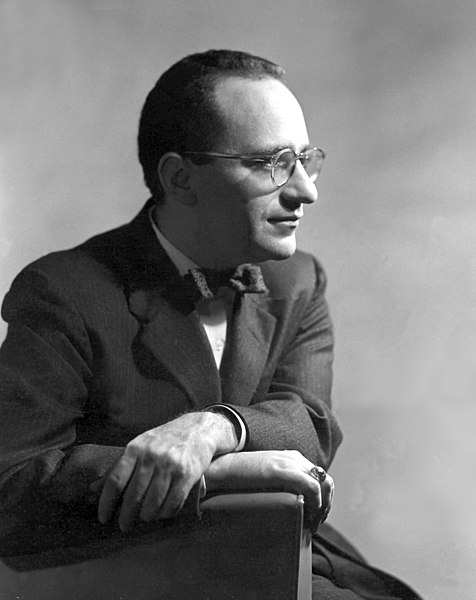
Ludwig von Mises and Murray Rothbard photos courtesy of the Ludwig von Mises Institute and used via CC BY-SA 3.0 license.  Atlas statue photo by Michael Greene and used via CC BY 2.0 license.  The above 3 images were obtained from Wikimedia Commons.  Rothbard t-shirt art courtesy of Red Bubble; t-shirt by Liberty Maniacs. Buy the t-shirt here.


Friday, January 25, 2013

YAL and the Lost Book of the Bible


The following is believed by archeologists and theological experts to be a chapter from a lost book in the Hebrew Bible.  It was one of the more than 900 texts known as the Dead Sea Scrolls, hidden from the world for two millennia by the sands of time.  Because of its shocking prophetic content—prophesying of worldviews and commandments of a modern liberty movement organization in existence today—it was long dismissed by the academic community of Biblical and theological studies.  However, radiocarbon dating and recent archeological excavations in Palestine have made great strides in authenticating this text.


For decades it was locked away deep in the vaults of the Smithsonian Institute until just days ago when a ninja stealthily broke into the vaults and silently made his way out with the ancient scroll containing the text.  The ninja’s master, Walter Block, defended the undefendable and liberated the previously hidden-away text, sending electronic copies to bloggers worldwide with a CC BY 3.0 license.  This is the hidden chapter from the lost text:

1 And Rebekah of Florida came down from the mountain with the stone tablet upon which were inscribed the YAL’s commandments, and she did address the multitudes of libertarians,
 
2 And she delivered unto them the five commandments of the one true YAL which were the following:
 
3 Be straightforward and hold no deception against thy fellow man, lest ye be called infiltrator.
 
4 Be not abrasive, for the reward for those who obey the commandments of the YAL shall be made tenfold in heaven, and the reward for those who cleave to their statist idols shall be like unto coals of a fiery furnace.
 
5 Be thou a loving and cooperative body, giving thy hand in friendship to all men, for verily the YAL declareth unto you, Go ye therefore, and make disciples of all nations, preaching and baptizing in the name of the Mises, the Rothbard, and the Paul.
 
6 Turn ye not away from the truth in which you are reborn, for the YAL will not hold him guiltless who forsaketh the truth, but shall reward he who maketh the truth known to all men, both statist and anarchist.
 
7 And remember, love others as you would love yourselves.  Love each other as you would love thy YAL who delivereth you from the shackles of intellectual darkness.
 
8 And after Rebekah proclaimeth the five commandments which were sent forth throughout the earth, the people marveled at the revelation delivered unto them by the one true YAL.
 
9 And the young Americans and all the host of libertarians did abide by the five commandments of the YAL, all except for one Adam called Kokesh, son of Conspiratarian.  Adam did hear the proclamation and waxed sore, saying
 
10 Nay!  Rebekah of Florida tarryeth with Jack Hunter, who tarryeth with Rand son of Ron, who sold his father to the RNC for thirty pieces of Federal Reserve silver.
 
11 (Adam knew not of the hidden arrangements between Rand son of Ron and the YAL, for the YAL was with both Ron and Rand and not with Adam).  And Adam said: Clearly only vicious ad hominem attacks will awaken people to our ideas and bring forth our victory in revolution.
 
12 And so the Conspiratarians did attack, and Adam saw that they were vicious.  And the battle cry of Adam was with them always,
 
13 And the sheeple waxed sore against the multitudes until social media was no longer fun, and so they did surrender themselves unto these teachings forever and ever.
 
14 And while no liberty candidate was ever elected ruler and judge over the people, Ron Paul never lost an online poll again.  Amen.

Wow!  What a revelation!

If you haven’t figured it out yet, this was pure libertarian-conservative comedy and in no way an actual violation of Revelation 22:18-19.  If you think it was, you’re probably a neocon, most likely voted for Rick Santorum, and at one point probably thought Donald Trump would have made a good presidential candidate.  Please come to grips with the shocking fact that your sh*t actually does stink and then learn to take a joke.

If you’re mad that this rant made fun of Adam Kokesh and conspiratarians, you’re probably Adam Kokesh, a conspiratarian, or both.  Please see the advice I gave to the neocons.

“Why all the audacious rants?” you might as.  Simply put, I once planned to run for office.  Unfortunately my district was ridiculously gerrymandered to the point that the new lines gerrymurdererd my chances of ever being elected.  At this point, I may as well be blatantly honest while I educate others and entertain myself in the process.

You might now be inclined to ask the follow-up question, “How the hell was this rant educational?!”  Elementary, my dear hater: it was a preparatory exercise.  If you were able to read and comprehend the archaic English, you might be ready to begin reading Human Action.  Enjoy the inevitable reshaping of your worldview, and you’re welcome.


* * *


Photo is of a page from Textus Vaticanus B. It's in the public domain and was obtained via Wikimedia Commons.  You wanna know what's amazing?  I haven't watched the Big Bang Theory in almost a month.  I'm also still stuck on an army base in the boondocks.  Both of these are a bad combination for an eccentric writer in the middle of a quarter-life crisis...

They're coming to take me away, hee hee!  They're coming to take me away, ha ha!