Monday, February 25, 2013

Midnight in Paris and 21st Century Libertarians


This evening I spent a wonderful time celebrating a happy occasion.  I had a fancy dinner with several friends and enjoyed their good company.  After parting with them, I stopped at a shoppette for a fountain drink and chanced upon a DVD for sale of a film I love, Midnight in Paris, which I just finished watching.  What a wonderful flick!  (In response to those snobby film buffs I say yes, you’re right that every Woody Allen movie is the same movie, and it’s a great movie, so shut the hell up already.)


Apart from making me feel charmed and all kinds of warm and fuzzy, as many nostalgic movies do, Midnight in Paris threw some great insights my way.  The main character is Gil Bender, a hopeless romantic engaged to a cosmopolitan and very materialistic woman.  While his fiancé lives very much in the now, Gil would prefer nothing but to stroll down every boulevard and admire every café in Paris, which they’re currently visiting.  Gil leaves his fiancé and her parents and friends one night and stumbles into a wrinkle in time which takes him back to the 1920s, the very time he constantly dreams of.

Gil gets the golden opportunity to party and spend quality time with his idols: Cole Porter, F. Scott Fitzgerald, Ernest Hemingway, Gertrude Stein, Pablo Picasso, and many more.  Along the way Gil meets the hauntingly beautiful Adrianna who is a dreamer and a romantic like he is.  The difference is that Gil is absolutely in love with the Paris of the 1920s while Adrianna wishes to go to the 1890s, as she’s just as discontented with life in her time as Gil is with 2010.  Gil and Adrianna fall in love but are soon faced with a choice to make; one wants to run away to the ‘20s while the other wishes to run away to the nineteenth century.

Gil realizes that Adrianna’s naïve idealism toward an earlier time is just as infantile and cowardly as his own adoration of her time period.  He realizes that the era in which he lives isn’t unsatisfactory, but that life itself can be unsatisfactory quite often and running away won’t fill the emptiness he feels.  Instead, one must make the best of what he’s been given and learn to appreciate the beauty around him.

That conclusion is exactly how I feel about the liberty movement today!  (Thank you, Woody Allen, for inspiring me.)

2012 was a bitterly difficult year for libertarians—Republicans, Capital Ls, and independents alike—and the future looks bleak for us as we slog through the anti-liberty mud and feces that is American politics in 2013.  We’re incredibly disappointed over how crookedly the deck was stacked against Ron Paul.  We’re disappointed that many of our liberty candidates were annihilated in the various elections throughout the year.  The elation that came with our victory over SOPA and PIPA was short-lived as many of the freedom-killing elements in the censorship bills were quietly inserted into other bills long since passed into law.  We watched in horror as the troop presence in Afghanistan was extended from 2014 to 2024 and the drones continue to wreak devastating collateral damage in Pakistan and Yemen.

Many libertarians are fed up with the federal government.  Many libertarians are done with politics altogether.  I’ve spoken with several folks and read about many who have decided to pack up and move to Brazil where there are more entrepreneurial opportunities and the “donations” as a workaround for government permits are affordable.  Many others will stock up on guns and ammo, grow their own food, and run sustainable homesteads.  Others still are leaving politics altogether, seeing it merely as a waste of time because of the extent to which the system is corrupted.  They quietly invest in gold as a backup for the welfare of their families as they passively wait for the worst to happen.


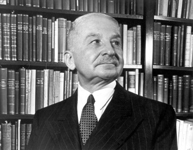
There are moments when we wish we could go back in time and live in eras where we know the outcome of history.  We want to enjoy the economic prosperity of the 1950s.  We want to vote for Barry Goldwater for President.  We want to be able to attend Ludwig von Mises’ exclusive lectures in New YorkWe’d love the opportunity to witness Murray Rothbard arguing with Nathaniel Branden in Ayn Rand’s smoke-filled apartment.  I’d treat Henry Hazlitt to dinner in a heartbeat just to hear him tell stories of what a pompous ass John Maynard Keynes is.  I’d give my right arm (pun intended) for a taste of the Old Right in Frank Chodorov, enjoying his take on the growing inclination of his era’s popular culture towards socialism.  I might even get my hopes up that Chodorov would introduce me to his mentor Albert Jay Nock over drinks and shooting pool.

If I was a truly greedy bastard, I’d have Professor Mises sign two first edition copies of his Theory of Money and Credit.  I’d then pull a Back to the Future and pay the Western Union to deliver the now-antique books to me in 2013.  My scheme would culminate in donating one to the Mises Institute, thereby gaining me many thanks and accolades, and I’d sell the other one for an outrageously exorbitant price.

All of these things would be simply wonderful, to say the least.  However, there will be no traveling back in time for any of us twenty-first century libertarians.  While we do have the option to run away to Brazil or run away through nonparticipation in the political process, there’s no way in hell I’d do either.  Mises ran from Austria only because the Nazis were going to murder him and his wife without question.  Freedom may be getting chipped away at here in twenty-first century America but the government isn’t killing us all yet.

There are still some liberties guaranteed to us by the Constitution that our self-appointed overlords in the Executive and Legislative branches can’t do away with just yet.  Furthermore, unlike the nations occupied by the Third Reich, many a conservative and libertarian in today’s America practice the Second Amendment and they’re prepared to fight as liberty’s last possible line of defense.  Personally, I’d like to prevent a civil war through constant and unyielding participation in the political process, preferring to fight with votes in the ballot box rather than rifles and bombs in the Sierras.

Vienna under the Third Reich
There are many unfavorable things about our time, but such is the way of all times.  Our heroes from the early-to-mid twentieth century had to deal with deep economic depressions, two world wars, the horrors of Nazism, and the growing evil empire of Soviet socialism.  The founders of the Austrian school in the nineteenth century found their careers made incredibly difficult by the state-controlled educational systems of Bismarck’s Germany and Habsburg Austria, neither of which tolerated any deviation in universities from official pro-regime doctrine.  Frederic Bastiat in the 1840s was still dealing with the far-reaching fallout from the Jacobins’ bloody revolution.

We face nothing like those crises.  The liberty movement in America is growing by the day.  Republicans of the libertarian faction are taking over more GOP committees at the local and state levels.  The Libertarian Party still wins the occasional city council seat.  More people speak favorably of Ron Paul and his ideas, and will be more inclined to vote for the conservative-libertarian Rand Paul in 2016.

Sure, times are hard right now, from the wars abroad to the yet stagnant economy at home.  Still, there are many wonderful things about the time in which we live.  We had the unparalleled privilege to campaign for Ron Paul, for which history will remember us fondly.  We have the opportunity to be lectured by and personally eat and drink with Tom Woods, Robert Murphy, Hans-Herman Hoppe, and other Austrian school celebritarians at Mises Institute conferences.  We get to meet other likeminded young people at ISFLC and the YAL National Convention, at which I’ve seen some of the smartest and most beautiful women alive (and it pleases me to know they’re libertarian and share my political passions).

Jeffrey Tucker writes with childlike wonder at the technological miracles and the unprecedented rise in living standards brought about through the free market by private sector ingenuity.  Better yet, through the Laissez Faire Book Club we’ll always be the first ones to have access to Tucker’s libertarian writings, as well as exclusive books by other libertarian authors.  All across America, two strangers who find out the other is libertarian become instant friends.

At the present time we’re faced with the great tasks of taking over the Republican Party, seizing the reigns of the State, and rolling back the size of government while restoring Constitutional liberties and a free market.  We can run away to 1920s Paris or we can make the best of the cards we’re dealt and have the courage to face our problems and undertake the tasks ahead of us.  Paris is just as beautiful in the rain today as it was in the 20s.  So is Washington D.C.  I could travel the world and visit every monument but I’ll always love my home town more.

History will look well on us when we accomplish our great tasks.  We might even have future generations approach us in our old age and say “Wow!  It’s really you!  I only wish I could have lived in your time and been a part of the Ron Paul Revolution!”  To them my response would be “You little cretin!  Do you not see the abundance of individual liberty and economic prosperity surrounding you?  Heaven forbid you should enjoy and fully appreciate what we worked so damn hard to bring you! Get out of my face!”  Well, I might not be quite as harsh…

I love Midnight in Paris.  It reminds me that, while the hard times distract us, there are wonderful things all around us that we take for granted.  Life is beautiful.


* * *


Midnight in Paris poster is the property of Sony Pictures Classics, was obtained from Wikipedia, and is used in a scaled down, low-resolution format for the express purpose of promoting the Sony Pictures Classics film. The image is used according to fair use law.  Ron Paul banner was obtained from Ron Paul Forums and is the property of the Ron Paul 2012 presidential campaign which no longer exists. Vienna image courtesy of the Vienna City website and assumed to be in the public domain as it was published on a government website. Midnight in Paris trailer is the property of Sony Pictures Classics and used via Standard YouTube License.  If you're still reading this, you'd be better off reading both volumes of The Rise and Fall of the Confederate Government; it'd be slightly less tedious.


Friday, February 15, 2013

How I Became a Ron Paul Supporter


It occurred to me that I’ve never actually put this story to writing, so now’s as good a time as ever.  At the very least some people will appreciate it before the Paul fervor becomes a thing of the past like the Goldwater Fever of ’64.  Nonetheless, like Barry Goldwater, Ron Paul is an incredible statesman whose ideas are timeless.

Despite my conspicuous militancy for him throughout the 2011-12 election cycle, I wasn’t a Ron Paul supporter in 2007.  Many of my friends and veterans in the liberty movement brag about being Paulbots BEFORE it was cool, and they often like to jive me for voting for John McCain in the ’08 primary as well as the general elections.  Screw them; I’m too much awash in liberty for my swag to be stained by Haterade spillage. (Clean up on aisle hate.)

I’d originally heard Ron Paul’s name in 2007 during his first presidential run.  This was the era before Facebook really began to take off and MySpace was still king of the social networks and most politically themed group pages had at least one militant Paulestinian posting Ron Paul spam.  This was before Tom and his cyberspawn became incredibly annoying with a corporate look and endless advertisements flooding everyone’s home page (hint hint, Mark Zuckerberg).

The Paulbot MySpace friend I had was a soldier and Iraq War vet named Alex—I vividly remember correspondence with him—and anyone who couldn’t tell from his page that he was a Ron Paul supporter was obviously illiterate.  I was mildly impressed that Dr. Paul’s campaign had raised nearly six million dollars in a single day, and mildly impressed that many soldiers and recent war veterans were doing video endorsements of him on YouTube (back when YouTube had barely been bought out and wasn’t a giant billboard paced for people tripping on speed).  However, I paid little attention to him because I was completely enamored with the candidacy of John McCain.

Plain and simple, I supported McCain because his contemporarily fashionable neoconservative rhetoric appealed to my young Republican warped idea of what conservatism was.  Better yet, McCain was a war hero—a veteran who truly suffered through unspeakable horrors as those North Vietnamese Marxist-Leninist bastards broke his body every day for five and a half years—and I was convinced we needed a war hero to guide a wartime country to swift and speedy victories in Iraq and Afghanistan after the Bush administration made quagmires of the conflicts.

I respected then-Senator Obama as a good man who stuck to his principles, and especially for having the courage to show his face as the first black presidential candidate.  Keep in mind, most of the country was secretly holding their breath, expecting a racist’s bullet to end Obama’s candidacy and existence on any given day.  Getting out of bed every morning and making public speeches with that knowledge took a lot of testicular fortitude.

I respected Senator Obama but I didn’t agree with him.  Many people my age were completely in love with his candidacy because of the idea of finally having a black President of the United States.  In my opinion, they were being racially condescending to vote for his skin color over his platform.  I saw Obama not as the black candidate, but as the candidate with whom I respectfully disagreed.

Throughout 2007 and 2008 it never occurred to me that I was casually brushing off any second thoughts towards the greatest statesman of my era: Ron Paul.  So the election came and went.  I optimistically voted for McCain and was disappointed when Obama won.  My mother bought an expensive bottle of champagne to celebrate the election of America’s first black president; I was worried that the next President—white or black—would make the economy worse with higher taxes and his administration wouldn’t bring us victory in the two wars.  (I was right about that, but for the wrong reasons.)  Oh well, I moved on and so did most Americans.

As far as Alex the Paulbot, his whacky posts about Ron Paul were entertaining and mildly interesting but I could never bring myself to read more than a paragraph before succumbing to Internet ADD.  I actually deleted Alex from my friends list because he was a white supremacist and his anti-black, anti-Hispanic, and anti-Semitic posts got old real fast.  I’m a pretty tolerant guy and I knew the difference between tolerance and acceptance; he has the right to have hate in his heart but I don’t need to pay attention to his hate speech.  Yeah, yeah, the Jews killed Jesus and are now controlling the banks and conspiring to eliminate the white race through interracial breeding.  I get it, Alex.  I heard ya loud and clear the first twelve times.

At this time in my life I was a giant movie buff.  All my closest friends and I ate, slept, and breathed movies.  Our lives revolved around getting together for movie nights where we’d order a pizza, watch two, three, even four movies of all genres (our favorites were from the Criterion Collection closely followed by cult classics), and critique them.  Akira Kurosawa, Lawrence Olivier, Boris Karloff, you name it!

I spent a lot of time visiting friends and relatives in Los Angeles, where I would also make a pit stop either to McArthur Park or Chinatown to buy some bootleg DVDs.  At the time I worked part time for minimum wage.  If I was to build up my growing movie collection, I could spend $20 on one movie at any store or use that bill to get four movies at $5 a piece.  This is why economics is about human action and not about calculation and advanced mathematical formulas.  It’s not about how much spending or lack thereof is occurring or about how much Monopoly money a banking cartel prints, but rather about what decisions individuals throughout society make in utilizing their resources.  What’s the marginal utility of a $20 bill?  It could be one movie legally purchased that I could enjoy for a while, or the utility could be quadrupled through an illegal purchase.

I maximized the utility of my wage earnings by not spending money whenever spending was avoidable.  Hence I discovered Rapidshare, Megaupload, and Bit Torrent.  The bootleg movie shopping inspired me to pursue my other passion—books—through the Internet, and I downloaded quite a few eBooks and audio books.  Had I not been illegally downloading audio books from an online friend’s secret Megaupload account in January of 2009, I would never have stumbled upon the audio book for Ron Paul’s The Revolution: A Manifesto.

I would never have decided to check it out to see what Alex the white supremacist saw in the old man.  I would not have been amazed by the parallel audacity and sheer sensibility of these bold ideas.  I wouldn’t have been inspired to rush to Barnes & Noble and purchase the hardcover edition.  I would never have had my worldview radically reshaped.  I would never have taken Congressman Paul’s recommendation to visit Mises.org and learn Austrian economics from the Ludwig von Mises Institute.  I would never have discovered the prolific works of Bastiat, Menger, Mises, Hayek, Rothbard, and all the great economic writers of today who shared with me (at no cost) the idea of marginal utility which provides a solid economic explanation for my decision to buy bootleg DVDs instead of pricy legal ones.  I would never have been inspired to legally purchase physical copies of many of the books on Mises.org, even buying additional copies to give to friends and relatives


My own life experience adds great truth to Jeffrey Tucker’s essays on the greatness of the internet and the evils of restrictive intellectual property, especially so in “The Death of File Sharing” and “Two Views of the Internet” from the book A Beautiful Anarchy.  (Mr. Tucker also contributed one of his essays to the 2012 book I edited, VOICES OF RevolUTION: Americans Speak Out for Ron Paul.)  Both of us were touched by the vigor with which Dr. Paul opposed the SOPA and PIPA Internet censorship bills.

Apart from bringing me to legally purchase greater values than I downloaded for free or bought as bootleg, illegally downloading that Ron Paul audio book which changed my worldview and brought me back into world of politics which had previously left me disheartened and bitter.  I re-read The Revolution in late 2010, just after Rand Paul’s election to the Senate, and I was convinced of the rightness of Dr. Paul’s platform.  I was overjoyed when he announced his candidacy and looked for ways to get involved with the campaign.  The rest is history.

I’ve traveled the country on a number of political, economic, and social causes.  I’ve done what I still do today not so much for my hero Ron Paul, but for timeless liberty.


* * *


Ron Paul image courtesy of GaryJohnson2012.com.  A Beautiful Anarchy image courtesy of Laissez Faire Books and used via CC BY 3.0 license.  Voices of RevolUTION image courtesy of Lulu and myself.

Wednesday, February 6, 2013

PLEASE STOP: When NeoCons Think They’re Libertarian


Rand Paul makes one endorsement—almost at gunpoint—for Mitt Romney in June of 2012 and Romney actually expects Paulbots to vote for him.  Glenn Beck calls himself a libertarian even though his liberty-themed utopian towns are centrally planned and he endorses the ultra-conservative lunatic Rick Santorum, and now Reince Priebus says he reads Daily Paul every day.  What kind of a circus of make-believe have I walked into?

The other morning I had the dubious pleasure of reading the nastiest query response I’ve ever received.  The backstory: I recently wrote a 1,000 word op-ed titled “Purging the Republican Party to Save Its Future” which I’ve been trying to get published on several venues with the hopes that the ideas I present will click on a wide scale.  The article outlines the way the GOP has abandoned the paleoconservative and libertarian ideals that made it great, as well as concluding with a call to purge current leadership and hand over the reins to the libertarian faction.

Why should this happen?  Simply because the neoconservatives in the GOP have absolutely shattered the party, driven it over a moral and ideological cliff, killed freedom, and ensured landslide victories for ultra-statist Democrat candidates at virtually every level of government.  Maybe, just maybe, it’s time to hand control over to the people in the Party who have been saying “I told you so” since the Sixties.

Honestly, the neoconservative Republicans love to complain about how Obama and the Democrats killed our freedom.  The truth is that many of our country’s civil liberties (and general economic stability) were killed by the Bush administration, whereas the Obama administration’s running wild has merely been the tea bagging of the carcasses (as seen in the Halo games).

Anyway, Senior Editor Eric Dondero of LibertarianRepublican.net had the following gems to throw at me (and I quote verbatim except for the swear words I’ve edited):

·         Thank God George W. Bush invaded Iraq.  Can you imagine a world today where we were still dealing with Saddam?
·         Finally, a GIANT F**K YOU for bashing Mitt Romney, who in my opinion was the single greatest Republican presidential candidate since Barry Goldwater.  Better than Reagan.  This is a man who chose a FLAMING LIBERTARIAN Paul Ryan as his running mate.  And you have the audacity to bash him.
·         Dude, get the f**k out of my in-box.  Go pollute some leftist Republican sites like AntiWar.com or LewRockwell with your America-hating, Republican-bashing tripe.

And this gentleman calls himself a libertarian Republican 

First of all, his justification for the Iraq War (he listed supposed WMDs Saddam had, plus Al Qaeda camps he allowed in Iraq, and a bunch of other things making Hussein the “Hitler of our time”) would make him at best a paleoconservative like Goldwater—who was a great statesman and even a libertarian up to the point where he proactively used the words “Hanoi” and “atom bomb” in the same sentence—but by no means can Dondero call himself a libertarian, given his implicit outright rejection of the Non-Agression Principle through his defense of aggressive foreign policy.

Read "Purging the Republican Party to Save Its Future" by Zach Foster
I’m not even going to ask how a supposed libertarian can defend Mitt Romney—the man who flip-flopped on everything under the sun and STILL “take[s] a lot of credit” for TARP—can be a better presidential candidate than Ronald Reagan (much less the greatest Republican candidate ever).  Seriously, any man who could conceive of or support the ideas to force people to buy a commodity (health insurance) and rob people (through taxation) for the purpose of redistributing wealth in the form of anti-free market, very crony capitalist bailouts CANNOT BE LIBERTARIAN.

Beyond that, you’d think a supposed libertarian in the Republican Party would have been more supportive of Ron Paul, but alas!  I’ve learned that Mitt Romney is the greatest Republican candidate ever.

I’ll give Dondero a break on the Paul Ryan thing.  I believe when he used the words “flaming libertarian” in regards to Ryan, he actually meant to say “weirdo who goes back and forth between being a phony conservative and phony moderate.”  I would actually be inclined to apply that same description to Mitt Romney…

I don’t frequent AntiWar.com but I conjecture that while some libertarians do, their audience consists mainly of leftists because the left still pretends to be anti-war.  To the site’s credit, though, it does frequently blow whistles on the Obama administration’s militarism.

Regarding Lew Rockwell and his an-cap blog, he may or may not be a registered member of the GOP (I don’t know), but his libertarianism is that of the anarcho-capitalist variety, which is beyond the scope of the paleoconservative/libertarian philosophy surrounding the majority of libertarian Republicans.  While I respect the anarcho-capitalists for their fantastic economic theory and sublime libertarian philosophy, I’m not an an-cap but rather a minarchist.  I believe in Constitutional government of a limited size and scope just like a true Republican of both the capital and lower-case contexts of the word.

If the point of libertarian Republicanism was located on the Moon, Eric Dondero and his self-righteous rocket ship would be crash landing on Mars.  How can you there be a limited government when said government pursues a warlike foreign policy and socialistically redistributes wealth for eccentric programs like ObomneyCare and the cronyist bailouts?  In Dondero’s opinion, a government led by the “single greatest Republican presidential candidate since Barry Goldwater.”

One final note on this neoconservative hiding in libertarian clothing: I’m pretty sure the five years (and counting) of reserve military service, not to mention my ongoing Air Force Auxiliary service as well as my contract work training Army medics for war would attest to the fact that I feel like this American republic is worth fighting for.

All that Eric Dondero had to say about my submission was “No thank you” instead of repeatedly throwing the F bomb at me.  By the way Eric, kiss my ass for questioning my patriotism.

To neocons the above libertarian warning only applies to Obama
Dondero is just one of many neoconservatives in the Republican Party who libertarian values, but their idea of freedom isn’t the freedom to take control of one’s own destiny, but rather the freedom to conform unquestioningly to the dictums of the RNC and the propaganda of neoconservative ideologues.

I wish the phonies would just STOP pretending to be libertarian and simply own up to what they are.  I would have so much more respect if they stopped sacrificing meat to the idol of liberty and were completely honest that they’re nanny state conservatives who believe their version of the ideal government would govern best, and that the populace would fare the best according to the conservative nanny state code they prescribe.  At this point in time, they wouldn’t dare.

Whether they realize it or not, they’re afraid to admit their belief that their ideal form of government has the right to spy on citizens (even if it’s for “security”), to tax citizens (even if just for “defense”), to torture prisoners (even if just for “fighting terrorism”), to conscript people for public service or military service, and to redistribute wealth to corporations to stimulate a failing economy, etc.  They’re afraid to admit these things because they know it amounts to FASCISM.  To them, it’s easier to wave a banner and demonize a dissenter as unpatriotic when the dissenter is in fact a libertarian and a patriot who truly embodies the ideas of liberty while they who accuse him are closeted fascists.


* * *


An-cap Republican elephant image by the author.  Fire breathing Republican elephant image also by the author based on the public domain Manifest Destiny painting by John Gsat. Tea Party flag photo in the public domain and obtained from Wikimedia Commons along with Gast painting.

I bet Eric Dondero enjoys the hell out of Fox News...


Wednesday, January 30, 2013

Mises, Rothbard, Ayn Rand, and Atlas Shrugged: Braingasm and Buzzkill


After spending several hours being productive through doing freelance work online had given me a smug feeling sufficient enough to get me through the lonely night, I decided to reward myself through perusing the Journal of Libertarian Studies (Vol. 21, No. 4).  The gems through which I picked my way were letters from Ludwig von Mises and Murray Rothbard to Ayn Rand complimenting her on writing Atlas Shrugged.  Each economist had different reasons for complimenting her, but both of their letters drew a hell of a reaction from me.

Ludwig von Mises
First reprinted was von Mises’ letter, dated January 1958.  He described the novel as “a cogent analysis of the evils that plague our society, a substantiated rejection of the ideology of our self-styled “intellectuals” and a pitiless unmasking of the insincerity of the policies adopted by governments and political parties.”  I have to complete agree with him.  After all, when approaching it from a historical context one can appreciate that the novel was completed and published in an era when the FDR administration’s Bismarckian-socialistic New Deal programs were seemingly cemented in modern economic history as the brilliant initiatives that “lifted” America out of the Great Depression.  Furthermore, the fact that FDR—an indisputably popular president—had died in office during a time of war gave his life and the legacy of his administration a decades-long immunity from heavy scrutiny or criticism.  To top it all off, the domestic economic boom of the late 1950s, due largely to the fact America was virtually the only country in the world whose full capability for mass-production wasn’t obliterated in World War II, gave the temporary illusion that the 90% marginal tax rate and subsequent government redistribution were actually working.

Ayn Rand was essentially painting a target on her own back on which the contemporary leftist intelligentsia were to initiate a free-for-all.  No great thinker in America has been so unpopular due to unfortunate timing since Ron Paul explained blowback in the 2007 Republican presidential debates.

The part of Mises’ one-page letter that drew the biggest reaction from me was his complimenting Rand for blatantly telling the masses what they’d never before been told: “you are inferior and all the improvements in your conditions which you simply take for granted you owe to the effort of men who are better than you.”  Ouch!  Unfortunately, that’s true.  Nonetheless, I need some ice for that burn because—despite the dozens of pro-liberty articles I’ve written—I’m one of the masses.  My ideas on theory of political philosophy and political economy don’t amount to a grain of sand compared to the founders of McDonalds, the super chain which has fed billions of on-the-go persons worldwide at bottom-dollar prices.

While Mises’ bold and honest statement certainly is true, and it’s fine and dandy for conservative-libertarians like myself to read in a libertarian journal, it would greatly behoove the liberty movement if we found friendlier ways to communicate that basic economic concept to the statist masses.  Simply put—and many libertarians are guilty of this in the highest, as social media would attest—simply stating that bold economic concept in those bluntly harsh words makes us all look like heartless douche bags who have had one beer too many after a rough day at the office.  If we wanted to find a more eloquent and palatable (and generally less dick-ish) way to communicate that idea, I would recommend Rand’s talking points from John Galt’s radio address which Nathaniel Branden selected for “The Moral Revolution in Atlas Shrugged,” comparing the medieval-era blacksmith to the industrialist Hank Rearden.

“If you worked as a Blacksmith in the mystics’ Middle Ages, the whole of your earning capacity would consist of an iron bar produced by your hands and days of effort.  How many tons of rail do you produce per day if you work for Hank Rearden?  Would you dare to claim that the size of your pay check was created solely by your physical labor and that those rails were the product of your muscles?  The standard of living of that blacksmith is all that your muscles are worth; the rest is a gift from Hank Rearden.”

There are many conservatives (neoconservatives) and liberals (leftists) who are willing to identify with bits and pieces of libertarian philosophy, which means our movement has a foot in the door of their mind for further conversion, provided we share our ideas with them in a civil and courteous manner rather than the shock/awe/insult tactic of which so many libertarians are guilty.

Murray Rothbard
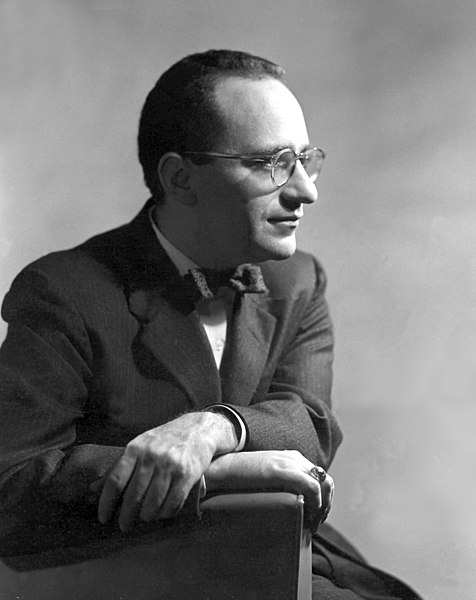
Rothbard’s letter—lengthy and never straight to the point (very Rothbardesque indeed)—absolutely kisses up to Rand for two pages before moving on to another topic.  While I can generally agree with the spirit of his praises of Rand’s magna opus, I was slightly disappointed to read that Rothbard never particularly liked novels and saw them as “at best… a useful sugar-coated pill to carry on agit-prop work amongst the masses who can’t take ideas straight.”  While it’s certainly a good thing that Rand instilled in Rorhrbard a positive view of novels, I think he may have missed the point.

Most novels, like films, aren’t composed to communicate deep ideas but rather to entertain the masses.  Despite the entertainment factor, the novel has the potential to cleverly and deceptively communicate deep and inspiring ideas to those who would otherwise avoid such ideas in a nonfiction book, essay, or lecture.  Others who are content to stay within their own narrow worldview would avoid a book with a title implicit of opposing viewpoints, but would be very compelled to peruse the scandalous new novel all their friends are talking about.

Atlas Shrugged is by no means the first novel to communicate classical liberal (libertarian) ideas, change people’s worldviews, and inspire some type of action.  Hugo’s Les Misérables compelled French society to take a second look at the flawed and grievously unbalanced system of crime, punishment, and civil rights.  Stowe’s Uncle Tom’s Cabin convinced thousands that is was morally unacceptable for a human being to own another human being.  Steinbeck’s The Moon Is Down spurred civilians in Axis-occupied countries to resist the occupiers.  Dickey’s Deliverance inspired grown men everywhere never to go camping again.  Finally, Atlas Shrugged made rugged individualists and free market advocates out of the staunchest socialists and middle-of-the-roaders.  Let everyone be reminded there’s a reason why the Mises Institute keeps novels in its catalogue...

The other bit from Rothbard’s letter that drew a surprised reaction from me—from the second half—I’d simply have to let you read in his own words.

…I owe you an explanation: an explanation of why I have avoided seeing you in person for the many years of our acquaintance. I want you to know that the fault is mine, that the reason is a defect in my own psyche and not a defect that I attribute to you. The fact is that most times when I saw you in person, particularly when we engaged in lengthy discussion or argument, that I found afterwards that I was greatly depressed for days thereafter.
 
…I can only think of one or both of the following explanations: (1) that my brain became completely exhausted under the intense strain of keeping up with a mind that I unhesitatingly say is the most brilliant of the twentieth century; or (2) that I felt that if I continued to see you, my personality and independence would become overwhelmed by the tremendous power of your own.

Of the two reasons Rothbard lists for his post-Ayn Rand depression, I could take #1 at face value.  This is most likely where Rand and Rothbard would have fallen in the classical trap many libertarians continue to fall in today: they’re already in perfect agreement on over 90% of the philosophy, but being stubborn intellectuals they’re often accustomed to approaching the libertarian ideal as “good” and every contradictory philosophy and system as “evil.”  Hence, their great minds would naturally approach intra-philosophical debates between different sub-topics within libertarianism as an extension of the ideological struggle between good and evil, and each party would argue and debate the merits of his trivial detail to the bitter end.  To witness how intense and exhausting such debates can be, one need only witness a round between a libertarian monarchist and anarcho-capitalist at the YAL National Convention or the ISFLC.


However, I feel that #2, “my personality and independence would be overwhelmed,” comes across to me as diplomatic speak for “you’re a controlling psycho.”  As much respect as I have for Rand as a brilliant novelist and philosopher, I’m fully aware of the personality shortcomings that made her notorious among libertarians of her day.  I’m reminded of the anecdotes offered by JoAnn Rothbard on her husband’s life which provide juicy glimpses into the world of Ayn and her cult.  Two examples I can think of right off the bat: 1) because she was a self-conscious chain smoker, Rand would make everyone who visited her apartment smoke.  No exceptions.  2) When asking her questions about her work, inquirers were only allowed to ask her to explain the meaning behind certain passages from a certain page.  They were never allowed to question her premises, her arguments, or her theories.  I’ll even add a third; in the words of Rothbard’s wife, “Ayn Rand was a very smart woman.  Anyone who could devise a philosophy, one of the main tenets of which she is the most sexually desirable person in the world, has got a lot on the ball.”  You all really ought to listen to JoAnn Rothbard’s reminiscences, since they’re very entertaining and the list of what Rand said and did to Murray (just one among many targets of her scorn) goes on and on.

The conclusion I draw from Rothbard’s letter to Ayn Rand is that Atlas Shrugged is an amazing novel that brings the reader to braingasm (intellectual orgasm), but Rand herself is a total buzzkill who ruins people’s day.  The legacies of General Patton, L. Ron Hubbard, and Alexander the Great all attest that people can be brilliant geniuses and total jerks at the same time.

My advice to libertarians is the following: take the unparalleled excellent work that Rand did to further spread the libertarian philosophy to fresh minds.  Just remember to be polite and respectful.  Not everyone can be blitzkrieged our of their statist/altruistic/socialistic worldviews.  These things take time.  After all, we’re talking about human beings and their very personal minds, not some computer hard-drive that can be programmed and reprogrammed in an hour.


* * *


Ludwig von Mises and Murray Rothbard photos courtesy of the Ludwig von Mises Institute and used via CC BY-SA 3.0 license.  Atlas statue photo by Michael Greene and used via CC BY 2.0 license.  The above 3 images were obtained from Wikimedia Commons.  Rothbard t-shirt art courtesy of Red Bubble; t-shirt by Liberty Maniacs. Buy the t-shirt here.


Friday, January 25, 2013

YAL and the Lost Book of the Bible


The following is believed by archeologists and theological experts to be a chapter from a lost book in the Hebrew Bible.  It was one of the more than 900 texts known as the Dead Sea Scrolls, hidden from the world for two millennia by the sands of time.  Because of its shocking prophetic content—prophesying of worldviews and commandments of a modern liberty movement organization in existence today—it was long dismissed by the academic community of Biblical and theological studies.  However, radiocarbon dating and recent archeological excavations in Palestine have made great strides in authenticating this text.


For decades it was locked away deep in the vaults of the Smithsonian Institute until just days ago when a ninja stealthily broke into the vaults and silently made his way out with the ancient scroll containing the text.  The ninja’s master, Walter Block, defended the undefendable and liberated the previously hidden-away text, sending electronic copies to bloggers worldwide with a CC BY 3.0 license.  This is the hidden chapter from the lost text:

1 And Rebekah of Florida came down from the mountain with the stone tablet upon which were inscribed the YAL’s commandments, and she did address the multitudes of libertarians,
 
2 And she delivered unto them the five commandments of the one true YAL which were the following:
 
3 Be straightforward and hold no deception against thy fellow man, lest ye be called infiltrator.
 
4 Be not abrasive, for the reward for those who obey the commandments of the YAL shall be made tenfold in heaven, and the reward for those who cleave to their statist idols shall be like unto coals of a fiery furnace.
 
5 Be thou a loving and cooperative body, giving thy hand in friendship to all men, for verily the YAL declareth unto you, Go ye therefore, and make disciples of all nations, preaching and baptizing in the name of the Mises, the Rothbard, and the Paul.
 
6 Turn ye not away from the truth in which you are reborn, for the YAL will not hold him guiltless who forsaketh the truth, but shall reward he who maketh the truth known to all men, both statist and anarchist.
 
7 And remember, love others as you would love yourselves.  Love each other as you would love thy YAL who delivereth you from the shackles of intellectual darkness.
 
8 And after Rebekah proclaimeth the five commandments which were sent forth throughout the earth, the people marveled at the revelation delivered unto them by the one true YAL.
 
9 And the young Americans and all the host of libertarians did abide by the five commandments of the YAL, all except for one Adam called Kokesh, son of Conspiratarian.  Adam did hear the proclamation and waxed sore, saying
 
10 Nay!  Rebekah of Florida tarryeth with Jack Hunter, who tarryeth with Rand son of Ron, who sold his father to the RNC for thirty pieces of Federal Reserve silver.
 
11 (Adam knew not of the hidden arrangements between Rand son of Ron and the YAL, for the YAL was with both Ron and Rand and not with Adam).  And Adam said: Clearly only vicious ad hominem attacks will awaken people to our ideas and bring forth our victory in revolution.
 
12 And so the Conspiratarians did attack, and Adam saw that they were vicious.  And the battle cry of Adam was with them always,
 
13 And the sheeple waxed sore against the multitudes until social media was no longer fun, and so they did surrender themselves unto these teachings forever and ever.
 
14 And while no liberty candidate was ever elected ruler and judge over the people, Ron Paul never lost an online poll again.  Amen.

Wow!  What a revelation!

If you haven’t figured it out yet, this was pure libertarian-conservative comedy and in no way an actual violation of Revelation 22:18-19.  If you think it was, you’re probably a neocon, most likely voted for Rick Santorum, and at one point probably thought Donald Trump would have made a good presidential candidate.  Please come to grips with the shocking fact that your sh*t actually does stink and then learn to take a joke.

If you’re mad that this rant made fun of Adam Kokesh and conspiratarians, you’re probably Adam Kokesh, a conspiratarian, or both.  Please see the advice I gave to the neocons.

“Why all the audacious rants?” you might as.  Simply put, I once planned to run for office.  Unfortunately my district was ridiculously gerrymandered to the point that the new lines gerrymurdererd my chances of ever being elected.  At this point, I may as well be blatantly honest while I educate others and entertain myself in the process.

You might now be inclined to ask the follow-up question, “How the hell was this rant educational?!”  Elementary, my dear hater: it was a preparatory exercise.  If you were able to read and comprehend the archaic English, you might be ready to begin reading Human Action.  Enjoy the inevitable reshaping of your worldview, and you’re welcome.


* * *


Photo is of a page from Textus Vaticanus B. It's in the public domain and was obtained via Wikimedia Commons.  You wanna know what's amazing?  I haven't watched the Big Bang Theory in almost a month.  I'm also still stuck on an army base in the boondocks.  Both of these are a bad combination for an eccentric writer in the middle of a quarter-life crisis...

They're coming to take me away, hee hee!  They're coming to take me away, ha ha!

Thursday, January 24, 2013

So Rand Paul and Hillary Clinton Walk Into a Hearing...

Your typical Foreign Relations Committee hearing when chaired by Rand Paul

So two people who want to be President of the United States walk into a Senate Foreign Relations Committee hearing; one is a Democrat and the other a Republican.  One plans to be heard while the other plans to do the hearing.  However, it turns out that rather than the Democrat be heard while the Republican does the hearing, the current Senator from Kentucky delivered an exceptional rhetorical falcon punch to the Democrat until-recently-Secretary of State regarding her questionable leadership over the embassy in Benghazi.  Realistically, it was more of a Dragon Ball Z-style mega punch by Senator Paul through the body of ex-Secretary Clinton.

“Had I been president at the time, and I found that you did not read the cables from Benghazi, you did not read the cables from Ambassador Stevens, I would have relieved you of your post.”

Ouch!  The standard operating procedure is to offer one some ice for that burn.  However, ex-Secretary Clinton should be content with procuring some ice either through her health care benefits as a federal employee or she could even settle for ObamaCare as tirelessly campaigned for by her former boss’ administration.

At this moment in time I feel it quite appropriate to make the case that a Paul presidency would take great strides in divorcing the ill-begotten marriage between government dollars and private sector health care which is responsible for driving the prices of health insurance and health care sky high.  Dr. Paul was even instrumental in establishing eye clinics in Kentucky that catered to patients without medical insurance.  Furthermore, Dr. Paul subscribes to Austrian economic theory, a school of economics whose leading thinkers have been providing ideas for privatizing health care completely and in a way that makes care and insurance easily affordable.  (See Mises.org and search “health care” because I’m too lazy to explain myself when others have already done it so well for me.)

Returning to the wrestling-style smack down of the Senate Foreign Relations Committee hearing, it’s beyond redundant to state that Senator Paul thought Secretary Clinton handled the Libya situation poorly.  Defenders of Secretary Clinton may criticize Senator Paul for being overly critical or even for being partisan.  However, there is nothing partisan about Senator Paul’s views on foreign policy, including Libya.  Let’s flash back to the filibuster speech he delivered on the Senate floor on September 21, 2012.

“We gave money [to] dictators, from Saddam Hussein—who was once our ally receiving billions of dollars—to the Mujahedeen who were radical jihadists, but at the time we didn’t mind if you were a radical jihadist if you were our radical jihadist, because they were opposing the Soviet Union.  But the Mujahedeen eventually became the Taliban who are now our enemies.

“According to [scholars] Corey and Ryan, the world’s worst dictators have received $105 billion under the guise of official developmental assistance.  Instead of helping the poor, the assistance is aiding the ability of the dictators to remain in power.  In fact, it keeps them in power long enough that it enflames the populace that we end up having to... [go back] because of war.

“Why is there such a widespread anti-Americanism?  Because we propped up and gave money to so many despots, to so many dictators…  Why are we seeing people burning the American flag?  Why are we seeing such great unrest in 30 different countries?  Because our foreign aid and our military aid has propped up dictators who become over decades despotic, autocratic, who torture their people, prevent freedom from occurring, and then there’s a backlash [against us].

The particular context of this speech was cutting foreign aid to Pakistan, Egypt, and LibyaLike his father, retired Congressman Ron Paul, Senator Paul is ideologically opposed to foreign aid just as the founding fathers were.  His use of these three unstable countries as a gateway to cutting foreign aid is particularly clever, in my opinion at least.  The reasons he gave for cutting foreign aid to these countries essentially boils down to the following: the government of Pakistan has only made half-assed efforts to a half-assed approach in fighting the Taliban and Al Qaeda in Pakistan, extremism and civil strife are rampant in Egypt, extremists in post-war Libya killed American diplomats without ever being held to account for it, and American intervention in foreign affairs—especially in middle eastern countries torn by civil war and civil strife—only breeds hatred and ill will against America and Americans (hence the angry mob murdering the diplomats in Libya).

Had Senator Paul (or his father) been President, not a dime of American government money would have gone to the extremists infiltrating these governments, there would have been no Americans killed in Libya because there would have been no American presence there, and there would have been no incident over which to relieve Secretary Clinton.  The sad irony is that leftists are going to dislike Senator Paul even more now that “he was mean” to Hillary Clinton, even though Paul’s view that America shouldn’t police the world or tell other countries what to do is sharply in contrast to Clinton’s view yet very much in line with the left’s views of a humble foreign policy.  Oh well, the left’s hypocrisy doesn’t make Rand any less cool.


The best part for me in witnessing all of this is knowing that Senator Rand Paul will run for President in 2016.  This is especially sweet because Hillary wants to run as well—it’s no secret she’s wanted to be President for a long time—and the combined embarrassment from the leadership failure in the “Benghazigate” scandal with Senator Paul’s grilling only serves to shatter Clinton’s dreams of being POTUS while solidifying Paul’s foundation.  Because I’m currently killing downtime on a military base in the middle of nowhere, I will now entertain myself by applying Senator Paul’s awesome burn to the following film scenarios:

Star Wars: Had I been king of Alderaan and found out you ignored the beacon signals about the Death Star, I would have relieved you of your post.

The Lord of the Rings: Had I been Lord Elrond and found out you ignored the mystical signs that the Nazgul were hunting Frodo, I would have relieved you of your post.

Star Wars again: Had I been a general and found out you ignored the message signals informing us that the Empire was going to attack the rebel base on Hoth, I would have relieved you of your post.

Harry Potter: Had I been head of the Order of the Phoenix and found out you, as headmistress of Hogwarts, ignored the owl letters regarding death eaters onto the castle grounds, I would have relieved you of your post.

Star Wars yet again: Had I been Admiral Ackbar and found out it was a trap, I would have relieved you of your post.

Full Metal Jacket: had I found out you were not under sniper fire in Vietnam nor in Bosnia/Kosovo, I would have relieved you of your post.

Star Trek the Next Generation: Had I been head of the galactic federation and found out you ignored that giant Borg cube that flew by the Enterprise, kidnapped Captain Picard and turned him into a cyborg, I would have relieved you of your post as Number One.

The Sandlot: Had I been your father and found out you lost the Babe Ruth autograph ball in the Beast’s yard, I would have relieved you of your post.

Star Wars in real life: Had I been Steven Spielberg or Francis Ford Coppola and found out you were going to make prequels to the Star Wars Trilogy, I would have relieved you of your post.

Perhaps the only thing sweeter than seeing Senator Paul destroying Democrats would be witnessing him spearheading the effort to purge the neocons from Republican Party leadership.  Honestly, with friends like the “conservatives” who went out of their way to bring down Ron Paul’s candidacy, who needs enemies?


* * *


USMC photo 090214-M-4150N-112 is in the public domain. Rand Paul photo by Gage Skidmore and used via CC BY-SA 2.0 license.  Both images obtained from Wikimedia Commons.  If FUNimation wouldn't be inclined to sue my pants off for using Dragon Ball Z fight stills, I would have used them in a heartbeat.