Showing posts with label Atlas Shrugged. Show all posts

Friday, February 3, 2017

Open Borders: Lesser Threat to Life and Property than the Trump State


President Trump was the target for sharp criticism after enacting a temporary but ongoing ban on immigration from predominantly Muslim countries.  While President Trump has certainly earned his share of criticism for hostility to immigration, Americans shouldn’t forget that the Democrat Party plantation hardly cares for immigrants either.  Both parties want a central strong state and naturally oppose the libertarian concept of open borders.  It’s still a hardly-spoken of secret on the Left that President Obama’s administration deported 29% more undocumented immigrants than George W. Bush’s administration.

Democrats will oppose open borders just as easily as the most conservative Republican.  Senators Barack Obama and Hillary Clinton both voted for the Secure Fence Act of 2006.  Democrat Congresswoman Zoe Lofgren just recently introduced a bill that removes the per-country cap on H1-B visa applicants, but it also more-than-doubles the minimum salary of applicants to $130,000.  If passed, the only other way applicants can get their H1-B visa is for the company hiring them to pay the government an extortion fee of 200% the applicant’s annual salary.  Therefore, companies would be paying three times for the value of one highly skilled worker.  This economy-killing legislation could have been pulled straight from a chapter of Atlas Shrugged.

Physicist Michio Kaku claims that the ongoing Information Revolution has a weakness, and that weakness is America’s educational system.  “If the stupid index of America keeps rising every year… how come the scientific establishment in the United States doesn’t collapse?

Read more at The Libertarian Republic

# # #

Monday, February 23, 2015

Celebrating the Life of Nathaniel Branden

This may have been the first time I ever enjoyed myself at a memorial service, but I had a blast at Nathaniel Branden's memorial service. Hosted at the Los Angeles Ebell Theater by the Atlas Society, it was great to hear a lot of big names in the liberty movement discussing the importance and personal impact of Branden’s work (which also had an impact on me, personally).

I remember one of the defining moments of my last few years: I was sitting on top of a Humvee in the Mojave Desert, wearing full (bloody) combat armor, reading “The Moral Revolution in Atlas Shrugged” under the desert sun.  At the time I’d been wrestling with some major personal issues and I was at a crossroads in life.  As a matter of fact, the Humvee I sat on was literally parked at a crossroads where two dirt paths crossed and continued into the sandy wilderness.

The number one theme I took away from Branden’s essay is this: with great liberty comes great responsibility—not a responsibility to strangers, but to self.  Branden wrote about asserting one’s rugged individualism and never being ashamed of success, especially when “social” pressures dictate otherwise.  But there’s another, more important side to that: one must always own up to one’s own failings.  But rather than self-castigate, one should alter their actions for the better and move forward in life.

In that one essay, Mr. Branden had a hell of a punch for my brain that helped put the Atlas Shrugged novel and my own confused life into proper context for me. That was a big deal.

It also spoke highly of Branden’s character that both his wife Leigh and amicably divorced ex-wife Estelle Devers were present, got along, and treated each other with dignity and respect. Hell, I already know which exes are totally banned from my funeral!

The service lasted almost three hours, with a variety of accomplished objectivists and libertarians speaking both of Nat Branden’s work as an intellectual and personal memories of a dear friend departed.  People shared funny, silly stories about Branden and played audio clips from his academic lectures.

It was fascinating to hear in Branden’s own words a new context for the infamous rape scene in Ayn Rand’s The Fountainhead.  While I didn’t agree with him 100%--rape is rape in my book—I will admit that there’s something to Branden’s reasoning in sexually repressed people who are intensely attracted to each other having rape fantasies.  After all, it’s the reason why 50 Shades of Grey is so wildly popular.

Judd Weiss shares memories of Nathaniel Branden
Many of the speakers who were mentored by Branden were aged, in their 50s and 60s. In this context, it was especially refreshing to hear from the cream of the crop of the second generation of Nathaniel Branden’s pupils: Judd Weiss.  Apparently other speakers ran over their allotted time, so Judd had to slash most of his remarks and deliver his speech in five minutes.  Judd's words were touching and he spoke from the heart, not so much about Nat’s work, but about the growing role Nat played in Judd’s life over the last 5 years.


Nat Branden spoke and wrote often these simple instructions: Feel deeply so you can think clearly.  I learned a lot and left the service feeling better about myself. I suppose the greatest feeling of all was being surrounded by people of strong character who aren't ashamed of their success, but also own up to their failures.  Men and women of this quality are few and far between, and no small part of their character and integrity was inspired by the words and deeds of Nathaniel Branden.


* * *


Color photo by Judd Weiss.  Black and White photo by Avens O'Brien.

Sunday, September 29, 2013

Libertarians and Culture... A Bit Lacking?

Leftism dominates Hollywood while libertarians beg for scraps
Many of my readers have wondered why the Rants have been so quiet lately.  They’re used to getting 2-3 rants a week from me, not to mention the shameless spamming all over Facebook and Twitter.


Luckily, I have two rants ready to be published this week, so my readers need not fear.  Still, that doesn’t exactly explain why the recent lack of content on my blog.

The truth is that over the past few months I’ve been writing my butt off… just not so many rants.  I’ve been writing not just articles, but books!  I already announced on a radio interview that I’ll soon be releasing a compilation book (hey, I can’t let Jeffrey Tucker or Ann Coulter have all the fun).

This book is over 300 pages long and includes my best rants, as well as other editorials I’ve written for other venues. The title is Don’t Piss Me Off!: Libertarian Republican Rants and Raves.

The best part about it is that I’m releasing the e-book free of charge.  That’s right, it’ll cost readers zero dollars and zero cents to download it!  Consider it a special thank you to all my brothers and sisters in liberty who have encouraged me along the way.

But that’s not the main reason for my absence!  You see, I’ve noticed something that I feel can no longer be ignored by the growing libertarian community.

When it comes to economics and politics, we’re so far above and beyond the leftists—Marx, Keynes and Krugman are buried by the Austrian economists and libertarian philosophers.  Try as they might, no leftist (or neocon) statist has ever been able to refute us.

However, when it comes to culture, the left kicks our ass six ways to Sunday!  Leftist ideas dominate the movie industry, the music industry, and literature.  This is why Michael Moore gets standing ovations at the Academy Awards and George Clooney hosts $40,000-per-plate fundraisers in Hollywood for President Obama.

This is also why conservatives crapped their pants in excitement over the docu-film 2016: Obama’s America, and libertarians lost sleep counting down to Atlas Shrugged Part II: The Strike.

Both of the above mentioned films were fairly well made, but remarkably underwhelming and ultimately ineffective in swaying viewers away from leftism.  (Personally, my crush on Samantha Mathis was half my motivation for catching Atlas Shrugged Part Dos).


This is why libertarians need to become guerrilla novelists and guerrilla filmmakers, slowly but surely hacking their way into the cultural spotlight.  We won’t be getting major funding for big blockbuster films or New York Times bestselling books anytime soon, but we can sure as hell grow our niche.  I have no clue about filmmaking, but I do know a thing or two about writing.

Let’s look at an example of libertarian literature.  Ayn Rand did an amazing job with her novels.  As a matter of fact, I’m honestly having trouble naming a novel that outdoes Atlas Shrugged—only the unabridged Les Miserables comes to mind.  Now there is the rub—both novels are the sizes of cinder blocks, and it’s remarkably difficult to get today’s reader, with the attention span of a gnat, to put down Twilight in favor of The Fountainhead.

Rand’s novels, brilliant as they are, are also remarkably complex.  Their contents are too big of a pill for many folks to swallow.  This is why we need a new vanguard of libertarian writers to give the world a new wave of libertarian novels.  I’m talking about 100-300 page works that are dramatic, moving, and promote the ideals of liberty as wew see it.  We need literature, people!

I’ve always been good at talking about issues, but my friend Janine K. of the Libertarian Party called me on my BS and put it into perspective: “It’s easy to identify problems, but it takes a leader to do something about it.”  Very true, Janine!

And so, the whole time Zach Foster Rants has been quiet, Zach Foster himself has been typing away producing fiction novels.  Apart from Don’t Piss Me Off! and one other nonfiction book I wrote this summer, I’ve got two other novels I’ll have completed this year.  Writing them has been some of the most fun I’ve had in a while.

Provided I’ll be able to scrape up enough free time over this school year—two quarters to go before I’m done with my Bachelor’s Degree and my parents can let me die in peace—there will be several more novels where that came from.  I’m so excited!

Some of these novels I’ll self-publish, and for others I’ll bust my tail to find a publisher that’s bigger than, um, me.

In the meantime, I have a challenge for all of you.  I know some of you are also writers.  A few of you have libertarian or Constitutional conservative books you’ve self-published.  More of you have blogs on which you regularly write political op-eds or economic treatises.  I’m sure even more of you write in journals and do a little bit of fiction just for fun.

Why stop there?  You folks ought to join me in producing good, original libertarian fiction.  Don’t be afraid to self-publish either!  It’s better that your fiction, interwoven with libertarian ideas, reaches a smaller audience rather than no audience at all!  You have no idea whose mind you’ll change or whose life you might touch.


I know that some of you folks are better with a video camera or with a musical instrument than you are with writing.  That’s totally okay!  Grab your camera, grab your guitar and microphone, and use your artistic talent to promote liberty.  Don’t let Golden State and Aimee Allen have all the fun!  Get your stuff up on YouTube and iTunes!

The more that we all strive together to undo the cultural domination of statism over libertarianism, the sooner our ideas will become commonplace in the minds of ordinary folks who have little interest in politics.


So what are we waiting for?


* * *


Hollywood Sign image courtesy of Flickr user raindog808. Atlas Shrugged first edition cover art is the property of Random House and used according to Fair Use Law.  Timeless Books image courtesy of Lin Kristensen.  All images were obtained from Wikipedia and Wikimedia Commons.

Wednesday, January 30, 2013

Mises, Rothbard, Ayn Rand, and Atlas Shrugged: Braingasm and Buzzkill


After spending several hours being productive through doing freelance work online had given me a smug feeling sufficient enough to get me through the lonely night, I decided to reward myself through perusing the Journal of Libertarian Studies (Vol. 21, No. 4).  The gems through which I picked my way were letters from Ludwig von Mises and Murray Rothbard to Ayn Rand complimenting her on writing Atlas Shrugged.  Each economist had different reasons for complimenting her, but both of their letters drew a hell of a reaction from me.

Ludwig von Mises
First reprinted was von Mises’ letter, dated January 1958.  He described the novel as “a cogent analysis of the evils that plague our society, a substantiated rejection of the ideology of our self-styled “intellectuals” and a pitiless unmasking of the insincerity of the policies adopted by governments and political parties.”  I have to complete agree with him.  After all, when approaching it from a historical context one can appreciate that the novel was completed and published in an era when the FDR administration’s Bismarckian-socialistic New Deal programs were seemingly cemented in modern economic history as the brilliant initiatives that “lifted” America out of the Great Depression.  Furthermore, the fact that FDR—an indisputably popular president—had died in office during a time of war gave his life and the legacy of his administration a decades-long immunity from heavy scrutiny or criticism.  To top it all off, the domestic economic boom of the late 1950s, due largely to the fact America was virtually the only country in the world whose full capability for mass-production wasn’t obliterated in World War II, gave the temporary illusion that the 90% marginal tax rate and subsequent government redistribution were actually working.

Ayn Rand was essentially painting a target on her own back on which the contemporary leftist intelligentsia were to initiate a free-for-all.  No great thinker in America has been so unpopular due to unfortunate timing since Ron Paul explained blowback in the 2007 Republican presidential debates.

The part of Mises’ one-page letter that drew the biggest reaction from me was his complimenting Rand for blatantly telling the masses what they’d never before been told: “you are inferior and all the improvements in your conditions which you simply take for granted you owe to the effort of men who are better than you.”  Ouch!  Unfortunately, that’s true.  Nonetheless, I need some ice for that burn because—despite the dozens of pro-liberty articles I’ve written—I’m one of the masses.  My ideas on theory of political philosophy and political economy don’t amount to a grain of sand compared to the founders of McDonalds, the super chain which has fed billions of on-the-go persons worldwide at bottom-dollar prices.

While Mises’ bold and honest statement certainly is true, and it’s fine and dandy for conservative-libertarians like myself to read in a libertarian journal, it would greatly behoove the liberty movement if we found friendlier ways to communicate that basic economic concept to the statist masses.  Simply put—and many libertarians are guilty of this in the highest, as social media would attest—simply stating that bold economic concept in those bluntly harsh words makes us all look like heartless douche bags who have had one beer too many after a rough day at the office.  If we wanted to find a more eloquent and palatable (and generally less dick-ish) way to communicate that idea, I would recommend Rand’s talking points from John Galt’s radio address which Nathaniel Branden selected for “The Moral Revolution in Atlas Shrugged,” comparing the medieval-era blacksmith to the industrialist Hank Rearden.

“If you worked as a Blacksmith in the mystics’ Middle Ages, the whole of your earning capacity would consist of an iron bar produced by your hands and days of effort.  How many tons of rail do you produce per day if you work for Hank Rearden?  Would you dare to claim that the size of your pay check was created solely by your physical labor and that those rails were the product of your muscles?  The standard of living of that blacksmith is all that your muscles are worth; the rest is a gift from Hank Rearden.”

There are many conservatives (neoconservatives) and liberals (leftists) who are willing to identify with bits and pieces of libertarian philosophy, which means our movement has a foot in the door of their mind for further conversion, provided we share our ideas with them in a civil and courteous manner rather than the shock/awe/insult tactic of which so many libertarians are guilty.

Murray Rothbard
Rothbard’s letter—lengthy and never straight to the point (very Rothbardesque indeed)—absolutely kisses up to Rand for two pages before moving on to another topic.  While I can generally agree with the spirit of his praises of Rand’s magna opus, I was slightly disappointed to read that Rothbard never particularly liked novels and saw them as “at best… a useful sugar-coated pill to carry on agit-prop work amongst the masses who can’t take ideas straight.”  While it’s certainly a good thing that Rand instilled in Rorhrbard a positive view of novels, I think he may have missed the point.

Most novels, like films, aren’t composed to communicate deep ideas but rather to entertain the masses.  Despite the entertainment factor, the novel has the potential to cleverly and deceptively communicate deep and inspiring ideas to those who would otherwise avoid such ideas in a nonfiction book, essay, or lecture.  Others who are content to stay within their own narrow worldview would avoid a book with a title implicit of opposing viewpoints, but would be very compelled to peruse the scandalous new novel all their friends are talking about.

Atlas Shrugged is by no means the first novel to communicate classical liberal (libertarian) ideas, change people’s worldviews, and inspire some type of action.  Hugo’s Les MisĆ©rables compelled French society to take a second look at the flawed and grievously unbalanced system of crime, punishment, and civil rights.  Stowe’s Uncle Tom’s Cabin convinced thousands that is was morally unacceptable for a human being to own another human being.  Steinbeck’s The Moon Is Down spurred civilians in Axis-occupied countries to resist the occupiers.  Dickey’s Deliverance inspired grown men everywhere never to go camping again.  Finally, Atlas Shrugged made rugged individualists and free market advocates out of the staunchest socialists and middle-of-the-roaders.  Let everyone be reminded there’s a reason why the Mises Institute keeps novels in its catalogue...

The other bit from Rothbard’s letter that drew a surprised reaction from me—from the second half—I’d simply have to let you read in his own words.

…I owe you an explanation: an explanation of why I have avoided seeing you in person for the many years of our acquaintance. I want you to know that the fault is mine, that the reason is a defect in my own psyche and not a defect that I attribute to you. The fact is that most times when I saw you in person, particularly when we engaged in lengthy discussion or argument, that I found afterwards that I was greatly depressed for days thereafter.
 
…I can only think of one or both of the following explanations: (1) that my brain became completely exhausted under the intense strain of keeping up with a mind that I unhesitatingly say is the most brilliant of the twentieth century; or (2) that I felt that if I continued to see you, my personality and independence would become overwhelmed by the tremendous power of your own.

Of the two reasons Rothbard lists for his post-Ayn Rand depression, I could take #1 at face value.  This is most likely where Rand and Rothbard would have fallen in the classical trap many libertarians continue to fall in today: they’re already in perfect agreement on over 90% of the philosophy, but being stubborn intellectuals they’re often accustomed to approaching the libertarian ideal as “good” and every contradictory philosophy and system as “evil.”  Hence, their great minds would naturally approach intra-philosophical debates between different sub-topics within libertarianism as an extension of the ideological struggle between good and evil, and each party would argue and debate the merits of his trivial detail to the bitter end.  To witness how intense and exhausting such debates can be, one need only witness a round between a libertarian monarchist and anarcho-capitalist at the YAL National Convention or the ISFLC.


However, I feel that #2, “my personality and independence would be overwhelmed,” comes across to me as diplomatic speak for “you’re a controlling psycho.”  As much respect as I have for Rand as a brilliant novelist and philosopher, I’m fully aware of the personality shortcomings that made her notorious among libertarians of her day.  I’m reminded of the anecdotes offered by JoAnn Rothbard on her husband’s life which provide juicy glimpses into the world of Ayn and her cult.  Two examples I can think of right off the bat: 1) because she was a self-conscious chain smoker, Rand would make everyone who visited her apartment smoke.  No exceptions.  2) When asking her questions about her work, inquirers were only allowed to ask her to explain the meaning behind certain passages from a certain page.  They were never allowed to question her premises, her arguments, or her theories.  I’ll even add a third; in the words of Rothbard’s wife, “Ayn Rand was a very smart woman.  Anyone who could devise a philosophy, one of the main tenets of which she is the most sexually desirable person in the world, has got a lot on the ball.”  You all really ought to listen to JoAnn Rothbard’s reminiscences, since they’re very entertaining and the list of what Rand said and did to Murray (just one among many targets of her scorn) goes on and on.

The conclusion I draw from Rothbard’s letter to Ayn Rand is that Atlas Shrugged is an amazing novel that brings the reader to braingasm (intellectual orgasm), but Rand herself is a total buzzkill who ruins people’s day.  The legacies of General Patton, L. Ron Hubbard, and Alexander the Great all attest that people can be brilliant geniuses and total jerks at the same time.

My advice to libertarians is the following: take the unparalleled excellent work that Rand did to further spread the libertarian philosophy to fresh minds.  Just remember to be polite and respectful.  Not everyone can be blitzkrieged our of their statist/altruistic/socialistic worldviews.  These things take time.  After all, we’re talking about human beings and their very personal minds, not some computer hard-drive that can be programmed and reprogrammed in an hour.


* * *


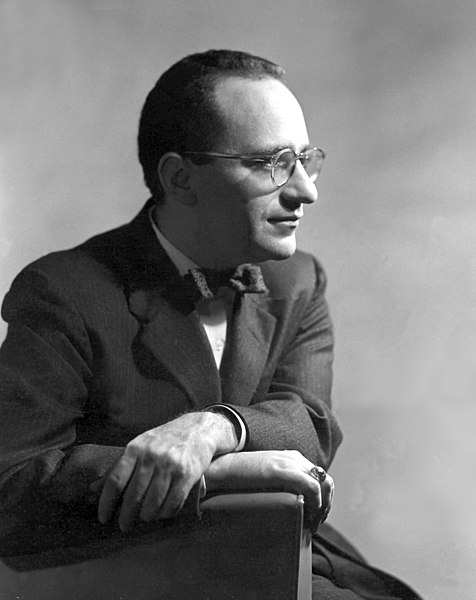
Ludwig von Mises and Murray Rothbard photos courtesy of the Ludwig von Mises Institute and used via CC BY-SA 3.0 license.  Atlas statue photo by Michael Greene and used via CC BY 2.0 license.  The above 3 images were obtained from Wikimedia Commons.  Rothbard t-shirt art courtesy of Red Bubble; t-shirt by Liberty Maniacs. Buy the t-shirt here.


Monday, December 3, 2012

Elephant in the Living Room: The Atlas Shrugged Movies


I’d briefly like to address the giant elephant in the living room that no one dares talk about: the Atlas Shrugged movies.  Frankly, I will admit that I did enjoy both movies.  However, this enjoyment came mainly because of three primary reasons:

·         I love the novel and also understood that both movies were low-budget indie flicks, so I had both context and an open mind
·         I helped promote both films, especially the second one, even at my own financial cost, therefore I was emotionally invested in psychologically convincing myself that I enjoyed them both
·         I honestly wouldn’t mind playing Seven Minutes in Heaven with either Taylor Schilling or Samantha Mathis.  [Ah, the things I missed out on in high school…]

He wishes!
While I enjoyed both films, I really have to admit that they were both mediocre.  Yes, I said it, get over it already.  You have greater things to worry about than my opinions, such as your significant other cheating on you, or your total lack of a significant other…  [No, I will not give you ice for that burn; quit being a socialist and buy it yourself with one of your John Galt gold dollars.]

Anyway, I stand by my statement on the films, so before any crackhead libertarian or angry objectivist gets mad at me, I fully believe we as liberty activists owe it to the great Ayn Rand to see that only the best adaptations of her prolific works are made.  Do you dare defend crappy mediums for communicating some of the most important ideas in modern history???  Didn’t think so.

Even if I forget about the soul-crushing cameo of Sean Hannity—a double standard-bearing neoconservative ideologue—in the adaptation of one of the greatest libertarian works ever written, there are two glaring problems with both movies.

First, changing the cast was lame and a half. Even though I probably would be inclined to run off to Vegas with Samantha Mathis and be married by an Elvis impersonator minister at a drive-thru wedding chapel, I still have to stick to my standards, even if it means no Vegas wedding.  Sorry Sam!  The producers should have just stuck with the same cast from Part I and simply put a gun to their heads to command better performances.  Switching faces only confused and alienated potential libertarians.  I get the argument about making Part II able to stand alone as a film, but the very fact that its part number is anything other than “1” fully undermines that cute notion.

Second, and most importantly, the length of time is a problem.  I understand the constraints of a low budget and blah-blah-blah, but some of the greatest movie classics have been made on shoestring budgets (Clerks, American Graffiti, Rocky, etc.).  Besides, the entire saga takes place in a business office, on a railroad track, and on a mountain in Colorado.  Not the costliest of venues!

The budget issue is no longer an excuse, especially with Part II having a larger budget.  Because of the length of the novel (over 1,000 pages of minimal action and maximum philosophy), the movies need to be at least 2 hours and 40 minutes each.

The short length of both films meant that they had to cut short all the prolific speeches that define the characters and their objectivist philosophy.  The most important speeches cut brutally short were Francisco D’anconia’s “if you saw Atlas” soliloquy and Hank Rearden’s “I own it” testimony at his trial.  While I do feel that D’anconia’s speech in the movie at least captured the spirit of the book’s intent, the trial scene certainly did not.

The speeches themselves are well-written and propose excellent arguments, and it misses the point to edit them down to short sound bites.  Remember, these speeches by D’anconia, Galt, et all are what psychologically breaks the characters down and makes them check out of the society to which they desperately clung for so long.  The speeches need to be long, emotionally intense, and actually convincing to the audience!  And all the best quotes that could have been used in the movies are in the book already.  Imagine that!

Furthermore, Rearden’s on-screen speech was basically limited to “I built that, screw you.”  Uhh, negative, ceasefire!  What it needed to be was a lengthier and wordier version of the following points:

·         I scraped together the investment capital to start my business.  “The people” neither helped me muster it nor pay it back to the investors.
·         I directed the entire growth and expansion of the business.  It was my vision and leadership alone.
·         I did not force any one of my employees to work for me, nor did I force them to take their beginning salaries.  They freely and voluntarily agreed.
·         I paid for every piece of equipment and every hour of labor, not the government nor “the people.”
·         I and I alone dreamed of my metal and poured the capital and brain power into developing it.
·         When the economy began to tank, I never took a dime of bailout money from the government or “the people.”  I made it the entire way on my own money and my own ideas.  I did not have “help.”  I had employees who did exactly what I said and were well paid for it.  Only the moochers who received government money should be required to give anything to the government.
·         Furthermore, the government condemned my metal, my business, and I at every step of the way.
·         I’ve been right the whole time and you’ve all been wrong.  I will not turn over my property and ten years of time, money, and labor to those who did absolutely nothing.

Hell, even if he had just listed those bullet points in the movie and said nothing else, the scene would have been saved.  I myself would have applauded it!  Instead, it was simply Rearden arguing “It’s mine, mine, mine, I don’t have to give it up.”

Remember folks, just saying something that people—the left and most moderates/centrists—already disagree with will not make them suddenly agree with it.  It will only reinforce their notion that libertarians and conservatives are all heartless bastards.  However, explaining a libertarian idea with the above points might actually sway a few newcomers to our side.  Keep in mind, oh smug liberty intelligentsia, that the goal of our movement isn’t to be right about economics and generally be smarter than everyone; our goal is to get a majority of society to at least nominally agree with our ideas and to demonstrate such at the voting booths.

Atlas Shrugged Parts I and II could have been a medium for swaying the masses to our side, but unfortunately they were not.  However, there still is a chance for the producers to come up with a gem in Part III.  It needs to be long, it needs to be philosophical, and the speeches need to be emotionally intense and jarring.  No more short scenes, no more speeding through the plot, no more cutting corners, no more excuses.  And if Part III has another new cast, I will commence punching innocent bystanders on Santa Monica Boulevard in my frustration.

The innovation in Galt’s Gulch needs to be both impressive and understood, not just eye capitalist eye candy.  After being broken down into donating Rearden Metal to the government, Rearden’s encounter with Ragnar the pirate needs to be a tense scene that convinces the audience that the pirate is the one who’s morally correct, and that Rearden did the right thing in crossing the line by helping a fugitive escape from the police.  Furthermore, John Galt’s radio address could be one of the greatest movie speeches of all time.

Make the effort, Mr. Putch, Misters Sandefur, O’Toole, and Scott.  I have full faith in your ability to win an academy award for Ayn Rand’s epic masterpiece.  If you’re willing to take my criticism seriously, I’d even be more than happy to personally join you in this endeavor, working late into the night with you all in a writing office in order to make a cinematic masterpiece.


* * *


"I am John Galt" protestor photo by "HKDP" and used via CC BY-SA 3.0 license.
Atlas statue photo is in the public domain.
German monorail photo by "Stahlkocher" and used via CC BY-SA 3.0 license.
All three images were obtained via Wikimedia commons.

Some of you may ask, if I call myself a libertarian, how is it that I can justify punching random people on Santa Monica Boulevard (or anywhere in the world)?  Elementary, my dear Watson!  Simply so: if the filmmakers want to slay Part III in the womb by giving the trilogy yet another fresh cast, then obviously the pillars of libertarian philosophy no longer matter since their desecration would become the norm.  The same would apply to the non-aggression principle.